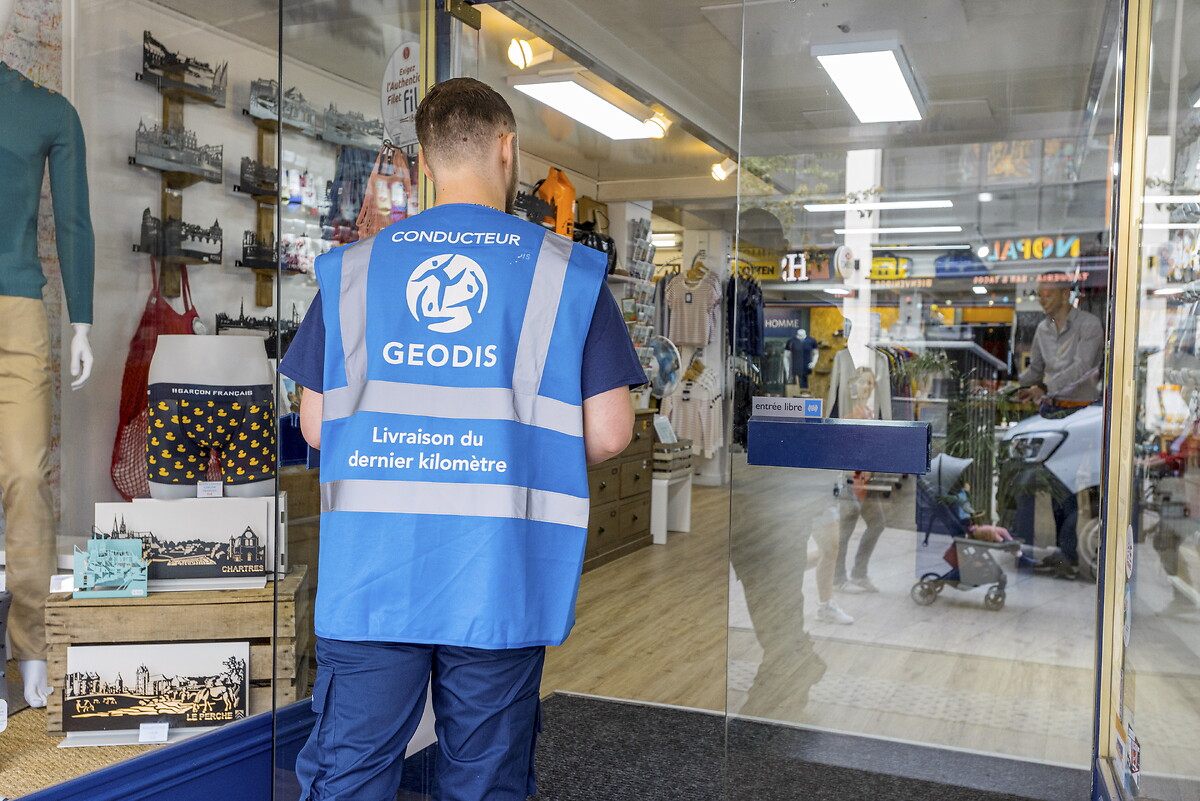
Last-Mile Logistics: Challenges, Innovations, and Performance
Last-mile logistics now plays a central role in the distribution chain. GEODIS views this segment as a true strategic driver: controlling costs, managing flows as close to the ground as possible, and integrating operational solutions tailored to urban realities are all key factors in ensuring customer satisfaction and overall performance.
A Top Priority
The rise of ecommerce, click and collect services, and curbside pickup has transformed logistics models, making supply chains more fragmented and raising consumer expectations. Last-mile delivery now accounts for a significant portion of overall supply chain costs, sometimes more than 30%. GEODIS helps its clients adapt to these changes by providing reliable solutions that enable them to optimize delivery times, manage growing volumes, and deliver an excellent customer experience.
Constraints Under Control
Urban environments impose specific rules: limited access, tight deadlines, and restricted delivery zones. GEODIS draws on its expertise and network to offer perfectly tailored delivery routes, thanks to continuous optimization of routes and resources. Our teams know how to anticipate unforeseen circumstances on the ground and adjust operations in real time, ensuring smooth deliveries and cost control.
Proven and innovative solutions for performance
GEODIS employs a variety of approaches to improve last-mile efficiency:
- Consolidating upstream shipments to reduce the number of delivery routes,
- Package lockers and automated kiosks to ensure secure delivery and prevent failures,
- Crowdsourcing solutions to manage peak periods,
- Combination of different delivery methods: home delivery, pickup points, and retail locations.
Upstream consolidation improves vehicle load factors, allowing them to exceed 80% and significantly reducing the number of kilometers traveled. Package lockers and automated kiosks enable the delivery of 30 orders in a single stop, whereas home delivery would require just as many trips. Crowdsourcing provides the flexibility needed to handle peak demand. Finally, combining distribution methods, including home delivery, pickup points, and parcel lockers, allows companies to adapt to recipients’ preferences.
It is the smart combination of these approaches, driven by data, that enables sustainable performance. For companies looking to take this step, outsourcing logistics is often the fastest way to access these solutions without heavy structural investment.
Innovation at the Heart of Our Approach
Innovation in the last mile addresses concrete challenges: accessing restricted areas, reducing the carbon footprint, and improving responsiveness. Electric cargo bikes are a prime example of this trend. With a capacity of up to 350 kilograms, they can travel where utility vehicles can no longer go, while reducing emissions, as demonstrated by our deployment in Lille using low-carbon vehicles. According to ADEME, more than 60% of package deliveries weighing up to 200 kilograms could be made by cargo bike in cities like Paris, compared to less than 5% today.
Optimization tools are evolving in the same direction. They now incorporate data in real time, including traffic, weather, and customer availability, allowing delivery routes to be continuously adjusted rather than being set in stone at the start of the day. In this regard, the digitization of logistics opens up concrete opportunities to improve efficiency at every stage. The result: better operational performance and an active contribution to the green transition.
Performance that is built across the entire supply chain
The last mile cannot be optimized in isolation. Its performance depends directly on decisions made earlier in the chain: a fragmented supply chain can cause vehicle load factors to drop below 50%, while a consolidated approach can push them above 80%.
Parcel and pallet transport plays a key role here: it allows volumes to be consolidated from a central warehouse or regional hub before being deconsolidated near delivery zones. This separation between consolidated transport and last-mile distribution prevents underloaded vehicles from operating and reduces pressure on the last mile. According to McKinsey, multimodal approaches can reduce long-distance transportation costs by 10 to 20%.
It is this overall consistency, from the point of origin to final delivery, that distinguishes organizations that are at the mercy of their logistics flows from those that actively manage them.
Optimizing the Last Mile with GEODIS
Fast delivery is no longer enough. What makes the difference today is the ability to deliver effectively, within a constrained environment, while keeping costs under control and maintaining a consistent level of service. This is where GEODIS comes in: detailed analysis of logistics flows, adaptation of distribution models to local constraints, and continuous performance management. Technology is a tool, not an end in itself. It is its integration into a coherent operational framework that transforms the challenges of the last mile into a sustainable competitive advantage.
Are you looking to build a more efficient and sustainable last-mile logistics system? Talk to our experts to identify the right strategies for your organization.