2026.08.03
Secure transport of goods and protection of sensitive flows
Learn how GEODIS helps companies secure their transportation operations to reduce risks, protect cargo, and ensure the continuity of logistics operations.
According to data from the Transported Asset Protection Association (TAPA EMEA*), a leading organization in the fight against cargo theft, several thousand cargo incidents are reported each year, including theft, damage, handling errors, intrusions, and damage during loading operations. In April 2023, reported losses averaged €834,367 worth of stolen goods per day across Europe, the Middle East, and Africa.
However, the actual cost of a logistics incident often far exceeds the value of the goods involved. Delivery delays, contractual penalties, production shutdowns, or loss of customer trust can quickly turn an isolated incident into a major operational problem. In this context, the secure transport of goods is no longer solely a matter of security. It is a direct issue of performance and risk management.
The main risks to goods
Logistics incidents rarely result from an exceptional event. They most often occur during the most critical stages of operations, where multiple parties are involved in succession and responsibility for the goods changes hands.
Loading and unloading operations
A significant portion of damage occurs even before the cargo leaves the shipping site. Poor load distribution, insufficient securing, or handling errors can cause damage within the first few kilometers.
The appropriate solution: precise loading protocols, systematic checks, and equipment suited to the nature of the products being transported. Lashing straps, securing devices, and shipping plans can significantly reduce the risk of cargo shifting during transit.
Theft and Intrusions
High-value goods are prime targets for organized criminal networks. Electronic products, industrial components, pharmaceuticals, or prototypes can represent tens of thousands of euros in value on just a few pallets.
The challenge is not limited to securing the vehicles. A shipment is often most vulnerable during stops, transshipments, or transfers between different parties.
At GEODIS, we analyze these vulnerable points to tailor the level of protection to the specific characteristics of each shipment. Depending on the sensitivity of the goods, this may involve real-time vehicle tracking, secure routes, limiting stops, or enhanced security protocols.
In France, GEODIS has also entered into a partnership with the National Gendarmerie that provides real-time access to geolocation data for certain sensitive shipments, facilitating a rapid response in the event of an incident and allowing for adjustments to transportation plans when the situation requires it.
Handling Errors and Damage
Many cases of damage (broken components, damaged equipment, crushed boxes, or damage caused by stacking) stem from inappropriate packaging rather than the transport itself. However, even properly transported goods can be damaged if their packaging is not designed to withstand the actual stresses of the logistics route.
The goal, therefore, is not to systematically reinforce protective measures, but to use appropriate packaging that accounts for handling, stacking, vibrations, and potential load shifts. When the packaging is sturdy and tailored to the product, it significantly reduces the risk of physical damage.
Optimal safety begins before the goods are shipped
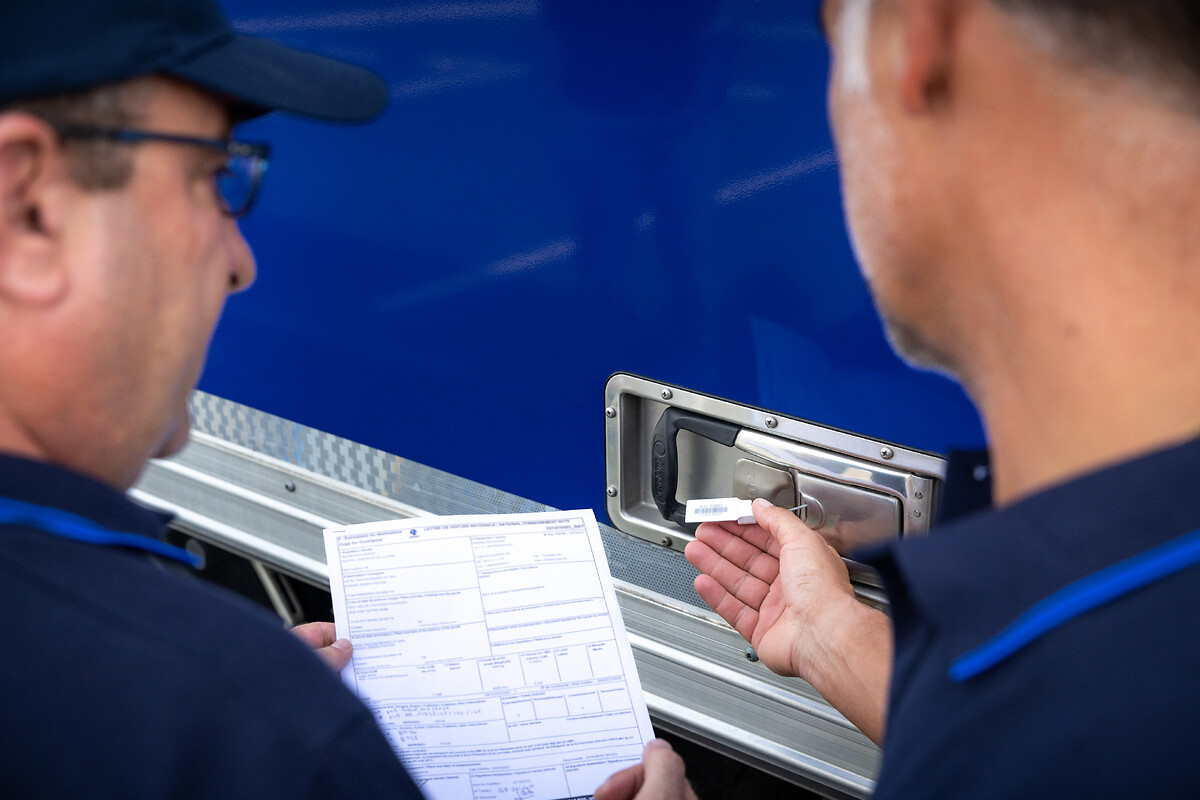
A large proportion of incidents originate even before the goods are shipped. Document errors, incomplete labeling, inadequate packaging, or insufficient verification can compromise the entire logistics operation. Thorough preparation, on the other hand, helps eliminate many risks even before shipments are picked up.
Product identification, proper labeling, document verification, and monitoring of loading operations help minimize errors that can later lead to incidents throughout the supply chain. Reducing incidents relies above all on standardizing operations. When control procedures, responsibilities, and validation steps are clearly defined, the risk of error decreases significantly during the preparation and shipment of goods.
Adjust the security level to the value of the shipment
Not all goods present the same level ofrisk exposure. A one-size-fits-all approach often leads to over-protecting certain shipments while underestimating the most sensitive ones.
The value of a shipment is not limited to the cost of the goods being transported. The loss of a pallet of components intended for a production line, critical equipment, or a prototype can result in manufacturing delays, contractual penalties, or the temporary interruption of operations. In these situations, the operational impact far exceeds the value of the product itself.
Pharmaceutical products, electronic components, strategic industrial equipment, prototypes, and even live animals thus present specific challenges in terms of security, traceability, and regulatory compliance.
A preliminary analysis of logistics flows helps identify shipments whose loss, theft, or damage would have the most significant consequences for the company. This approach then helps tailor security measures to the actual risk and the criticality of the goods, rather than applying the same level of security to all operations.
Technology and operations management
Ensuring the security of goods depends as much on the ability to prevent incidents as on the ability to respond quickly when they occur. To achieve this, companies must have continuous visibility into their operations and the location of their shipments.
Digital tools play a central role in this process. Geolocation systems, real-time tracking platforms, transportation management systems (TMS), and automated alert systems enable the rapid detection of delays, unscheduled stops, route changes, or breaks in traceability. This visibility facilitates decision-making and minimizes the impact of incidents on operations.
However, technology alone is not enough. Drivers, dock crews, logistics managers, and operations staff form the first line of defense against operational risks. Training staff on cargo security protocols, handling rules, and alert procedures directly helps reduce errors, secure cargo, and improve responsiveness in the event of an unforeseen incident.
Securing cargo flows regardless of the mode of transportation
Risks manifest differently depending on the mode of transportation used. An effective strategy must take into account the specific constraints of each operation and adapt protective measures accordingly.
Road Transport: For trucks, the main risks include unsecured stops, opportunistic theft, and handling errors during transshipments. Controlling routes, guiding drivers’ choice of parking areas, and tracking shipments can significantly reduce this exposure;
Air freight: The goods transported often have a high unit value and strict time constraints. Shipment traceability, access control, and secure procedures are the primary safeguards;
Ocean freight: Long transit times require special attention to container integrity, port call management, and the protection of cargo against unauthorized access or damage caused by transport conditions;
Rail freight: The consolidation of volumes improves the reliability of long-distance shipments but requires rigorous coordination with other links in the logistics chain to secure the transfer of goods;
Multimodal transport: The main challenge lies in transshipment, i.e. the process of transferring goods from one mode of transport to another, or from one party to another. These operations result in multiple handling steps and changes in responsibility. Having continuous visibility of shipments helps minimise information loss, coordination errors and poorly managed transfers of responsibility.
Pallet transport: Risks are concentrated primarily during loading, stacking, and handling operations. Proper packaging, secure lashing, and regular inspections help minimize damage.
Make security a driver of operational performance!
Securing your shipments isn’t just about preventing theft or damage. Above all, it aims to protect your business from the financial and operational consequences of a logistics incident. Before investing in new equipment or strengthening your procedures, start by identifying the stages where your risk exposure is highest: loading, parking, transshipment, or final delivery.
It is generally at these friction points that the most costly incidents occur. Our team supports you in this process by combining industry expertise, risk analysis, and solutions tailored to the nature of your goods and your operational constraints.
Talk to GEODIS experts to assess your risks and develop a secure transportation strategy tailored to your logistics challenges.
*TAPA EMEA - https://tapaemea.org/intelligence/e834000-of-products-reported-stolen-every-day-in-april-2023/