
Middle East Situation
Discover our latest customer advisories related to the Middle East Situation
07 April 2026
MIDDLE EAST SITUATION - PORT CONGESTION AND CONTAINER AVAILABILITY CHALLENGES AT INDIAN PORTS
Dear Valued Customers,
This is an update to our earlier advisory on the impact of the Middle East disruptions at Indian ports.
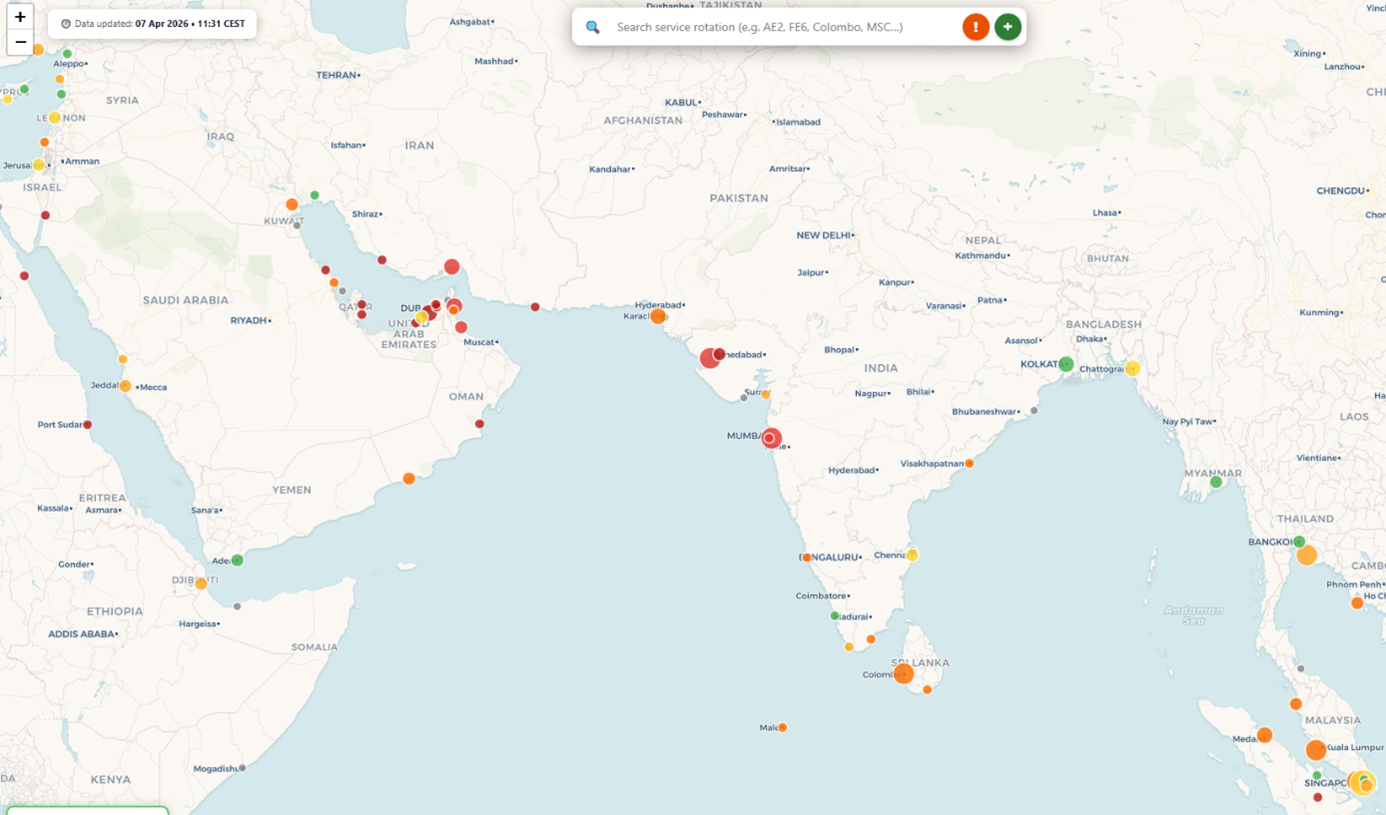
Source: Xeneta - Port Congestion Service Map, 07 April 2026, 11:37 CET
Due to increased congestion at major ports, please note the following:
- Empty Container Pickup: Entry restrictions are being imposed at empty container yards during peak hours (morning and evening, typically 4–5 hours each) to ease congestion, which may impact container pick-up times.
- Terminal Congestion: Mundra and Nhava Sheva ports continue to experience high congestion (over 60%). Reefer containers can now only be gated in after vessel berthing due to plug shortages. Please dispatch containers with extra buffer time.
- Empty Container Availability: There are serious shortages and quality issues with empty containers, especially reefers for pharmaceutical products. In some cases, carriers have advised that bookings may be canceled without cancellation fees due to non-availability of containers.
- Trailer Shortage: Trailer availability is limited as congestion slows movements. Turnaround time for reefer trailers is especially impacted.
- Potential Incidental Charges: Ports may soon introduce “Port Congestion Fees” which could impact shipping costs.
Recommended Actions
We strongly advise customers to plan shipments at least 2 to 3 weeks in advance wherever possible. Despite all mitigation efforts, delays and additional costs may still occur due to the current situation.
Our teams remain fully mobilized and are closely monitoring the situation to support shipment continuity and minimize disruption as much as possible.
Should you require any assistance or shipment-specific guidance, please contact your usual GEODIS representative.
Thank you for your understanding and continued partnership.
20 March 2026
MIDDLE EAST SITUATION - PORT CONGESTION AND CONTAINER AVAILABILITY CHALLENGES AT INDIAN PORTS
Dear Valued Customers,
We would like to update you on the current situation at major ports in India. Disruptions in the Middle East are causing a sharp rise in “End of Voyage” (EOV) containers at Indian ports, leading to growing congestion.
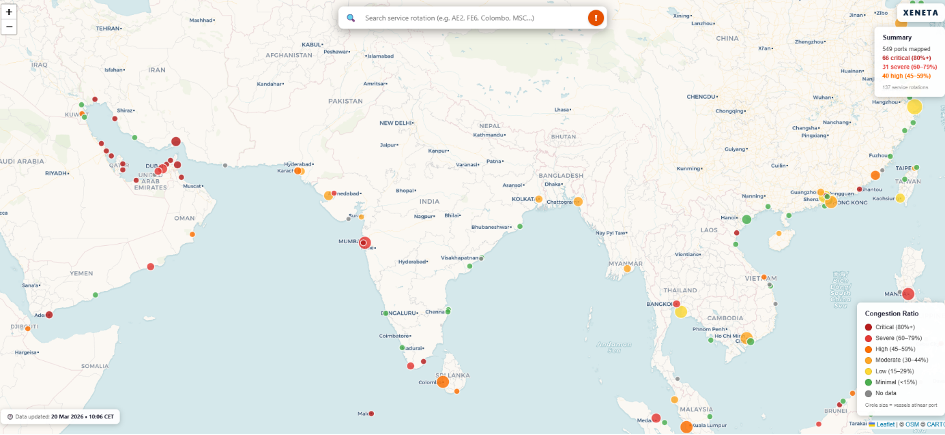
Source: Xeneta - Port Congestion Service Map, 20 March 2026, 10:06 CET
Affected Shipments
Indian Exports to the Middle East
Shipping lines are returning containers to India and declaring EOV, requiring shippers to collect cargo from CFS facilities.
Global Exports to the Middle East
Containers from other countries are being discharged at Indian ports and causing congestion at major port terminals like Nhava Sheva and Mundra. Currently, an estimated 15,000–18,000 containers are impacted, with numbers rising.
Potential Impact
Due to the growing congestion at the Indian ports, please anticipate potential delays of 3-5 days in cargo movement.
Empty Container Availability
- Export hubs in India depend on the supply of empty containers from Middle East ports, which is now heavily disrupted with restricted access in the Gulf.
- A 40–45% shortfall in empty containers is projected by mid-April, impacting both port and inland depots.
- Reefer container availability is especially critical due to high demand for seasonal exports.
- Shipping lines are actively working on solutions, however, resolution of these challenges may take some time.
Surcharges & Costs
Additional surcharges (war risk, fuel, congestion, etc.) may apply if the situation worsens.
GEODIS Monitoring and Guidance
GEODIS teams are actively providing regular updates and support to customers whose shipments are impacted.
We recommend the following actions:
- Plan shipments early and adjust supply chains for possible delays.
- Discuss alternative routes, modes or schedule options with your GEODIS representative.
- Flag any urgent or temperature-sensitive cargo needs. Shipping lines are prioritizing essential goods such as foodstuffs, pharmaceuticals, and energy products, and temperature-sensitive cargo in transit.
GEODIS is monitoring the situation closely with regulatory authorities and will keep you updated. Thank you for your continued trust and partnership.
Contact Us
If you have any inquiries, please do not hesitate to contact your local GEODIS representative.
We remain fully committed to supporting your logistics operations and ensuring supply chain continuity.
19 March 2026
MIDDLE EAST SITUATION - ALTERNATIVE ROUTING SOLUTIONS
Dear Valued Customers,
Further to our previous advisories regarding the evolving situation in the Middle East, ongoing geopolitical tensions continue to impact traditional shipping routes, leading to rerouting of ocean freight, congestion at alternative ports, increased transit times, and higher demand for air freight.
To support your supply chain continuity, GEODIS has developed robust and flexible alternative routing solutions to ensure the reliable movement of your cargo.
Strategic Gateways & Regional Connectivity
GEODIS leverages strategic gateways across Saudi Arabia, Oman, and the United Arab Emirates to connect global markets with GCC countries through efficient multimodal transportation solutions;
Global Connectivity Overview
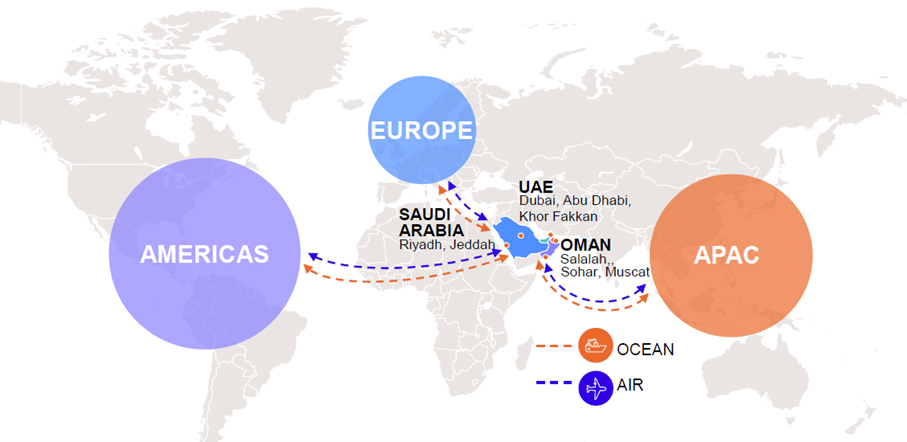
Source: GEODIS – Middle East Alternative Routing Solutions (March 2026)
These gateways enable optimized routing between Europe, the Americas, Asia-Pacific, and the Middle East, ensuring continuity despite disruptions.
Regional Gateway Network
GEODIS solutions are built around three key regional hubs:
- Oman (Salalah, Sohar, Muscat)
- Saudi Arabia (Jeddah, Riyadh)
- UAE (Abu Dhabi, Dubai, Khor Fakkan)
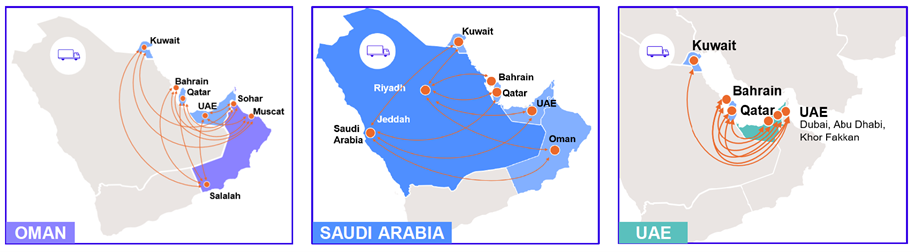
Source: GEODIS – Middle East Alternative Routing Solutions (March 2026)
These gateways serve as strategic entry and transit points, enabling flexible routing options and efficient distribution across GCC countries.
Through this network, GEODIS combines air, ocean, and secured road transportation to ensure seamless end-to-end connectivity.
Multimodal Transport Solutions
GEODIS offers integrated air, ocean, and road freight solutions, designed to:
- avoid disrupted or congested corridors
- minimize delays and transit time variability
- ensure secure and reliable cargo movement
- maintain flexibility in a volatile operational environment
Key Benefits of Our Solutions
Our alternative routing solutions provide:
- Strong Connectivity via Strategic Gateways – across air, sea and road
- Global Reach with Local Expertise – extensive international network combined with local operational knowledge
- Secured & Bonded Transportation – controlled and secure cargo handling
- Supply Chain Resilience – alternative routing to bypass disruptions
- Customs Expertise – efficient and streamlined border clearance
- Control & Visibility – for your shipments managed by GEODIS
GEODIS Support
Our global teams remain fully mobilized to:
- monitor operational and regulatory developments
- secure available transport capacity
- deploy alternative routing solutions
- support customers in adapting their logistics flows
As the situation continues to evolve, we recommend contacting your usual GEODIS representative to confirm the most reliable routing, transit times, and capacity for your shipment.
Contact us
If you need help finding an alternative routing solution for your cargo, please do not hesitate to contact your local GEODIS representative or click here.
We remain fully committed to supporting your logistics operations and ensuring supply chain continuity.
12 March 2026
MIDDLE EAST SITUATION - OPERATIONAL UPDATE - AIR & OCEAN FREIGHT IMPACTS
Dear Valued Customers,
The current geopolitical situation continues to impact logistics flows across the Middle East and surrounding regions. Ocean and air freight operations remain unstable, with evolving routing conditions, airspace restrictions, and operational constraints.
GEODIS teams remain fully mobilized to monitor developments and support customers with alternative routing solutions to maintain supply chain continuity.
This advisory provides an overview of the current situation across Ocean Freight and Air Freight, along with potential mitigation solutions.
Ocean Freight
Ocean freight operations in the region remain partially operational, with limited visibility from some carriers regarding cargo status and future network adjustments. Freight rates are increasing as the market reacts to disruptions and operational constraints across the region.
The Port of Salalah (Oman), previously considered an alternative entry point for cargo flows into the Gulf region, has temporarily suspended terminal operations.
Port Operations Status
The table below provides an overview of the current operational status of key ports across the Gulf region, indicating whether ports are fully operational, partially operational, or currently not accepting cargo
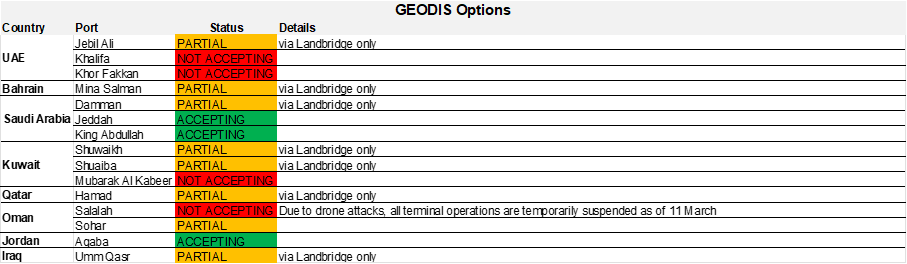
Source: : GEODIS internal operational monitoring – Middle East Network
Regional Landbridge Options
To support cargo continuity into the Gulf region, GEODIS teams have implemented regional landbridge solutions connecting key ports across the Middle East. Cargo can be discharged at operational ports such as Jeddah, King Abdullah, or Aqaba, before being transported inland via trucking corridors to final destinations across the region.
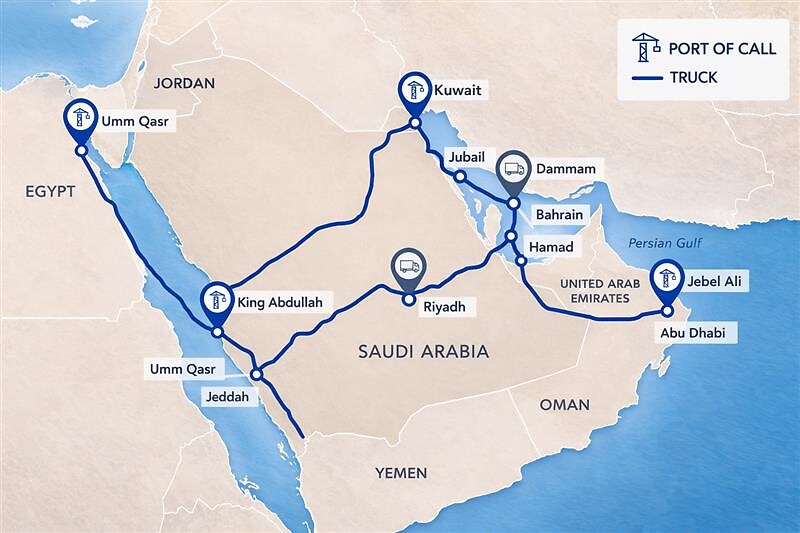
Source: GEODIS internal mapping – Middle East Landbridge network
Air Freight
Air freight operations across the Middle East and adjacent trade lanes remain also partially operational as airlines continue to adjust flight schedules and routing in response to evolving airspace restrictions and security assessments. While key hubs such as Dubai, Abu Dhabi and Doha remain operational, capacity availability remains volatile due to airline schedule adjustments, aircraft rerouting and congestion at major gateways.
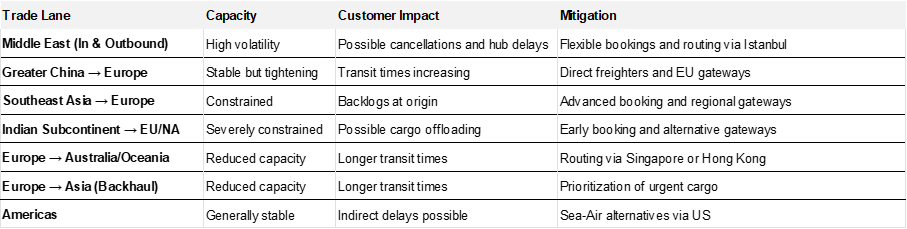
Source: GEODIS internal operational monitoring – Air Freight market analysis
Airspace Situation
The map below provides an overview of the current airspace situation that may impact air cargo routing. It highlights areas where airspace restrictions or operational risks may affect flight planning and transit times.
The map classifies airspace conditions into three categories:
- Do Not Fly – Airspace prohibited
- High Risk – Restricted operations
- Caution – Increased monitoring
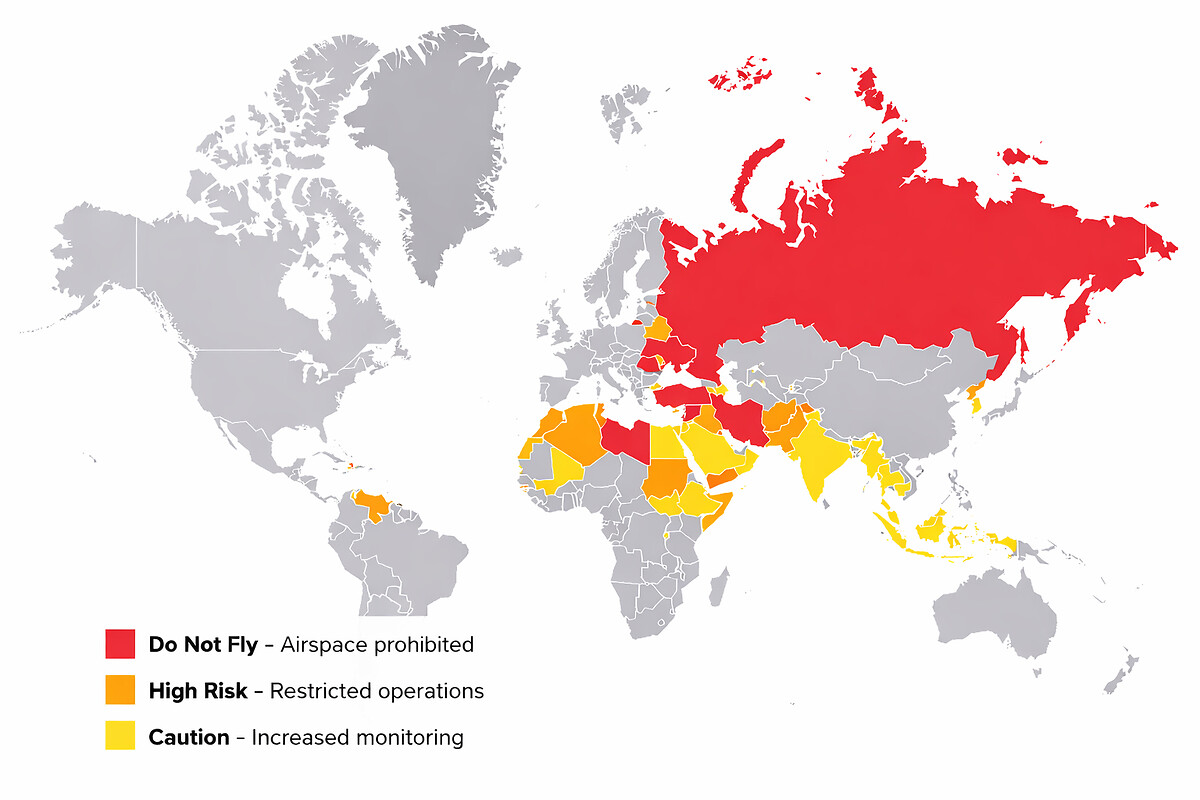
Source: GEODIS internal analysis – Airspace monitoring
Airspace Routing Constraints
A narrow corridor over Azerbaijan (Armenia–Georgia region) remains open, with a width of approximately 150 km, making it extremely congested.
- Approximately 23% of global air traffic demand currently uses this corridor.
- Due to congestion, some flights are being rerouted via southern Saudi Arabian airspace.
An alternative corridor through southern Saudi Arabia is therefore being used for certain routes, with flights redirected from the Azerbaijan airspace corridor.
These route restrictions result in an estimated average increase of approximately 15% in flight distance, adding around 1.6 additional block hours per flight, which leads to higher operational costs.
GEODIS Monitoring & Customer Guidance
GEODIS teams remain fully mobilized to closely monitor the evolving situation and support customers throughout this period of disruption.
Our teams are actively:
- Tracking affected shipments and containers in the region
- Monitoring carrier operational updates and network adjustments
- Evaluating alternative routing options where feasible
- Supporting customers with tailored logistics solutions when disruptions occur
Given the evolving operational environment, we recommend that customers:
- Contact their usual GEODIS representative before initiating shipments involving Middle East destinations or transit points
- Anticipate potential capacity constraints and rate volatility, particularly fuel-related adjustments
- Plan shipments as early as possible due to reduced capacity and potential rerouting.
Should you experience any difficulty related to shipments currently affected by the situation, please do not hesitate to contact your GEODIS representative or local GEODIS office.
09 March 2026
MIDDLE EAST SITUATION - OPERATIONAL UPDATE -AIR & OCEAN FREIGHT IMPACTS
Dear Valued Customers,
As the conflict in Iran and the broader Middle East enters its second week, significant operational disruptions are now affecting global transport networks across both air and ocean freight.
Due to ongoing security concerns and operational restrictions in the region, logistics flows through the Gulf remain under pressure. Capacity constraints, routing adjustments, and increasing operational costs are now impacting several trade lanes connecting Asia, Europe, and the Middle East.
GEODIS teams continue to closely monitor developments and are working closely with carriers and partners worldwide to mitigate disruptions and support supply chain continuity.
Below is the latest operational update.
Air Freight – Significant Capacity Constraints
Air cargo capacity across the Middle East remains severely constrained due to ongoing airspace restrictions and operational limitations affecting several Gulf hubs.
Significant regional airfreight capacity is currently impacted, creating pressure across the entire Gulf aviation network.
Remaining operational corridors between Asia and the Gulf are extremely limited, with most viable routing options currently passing through Central Asia, significantly reducing operational flexibility.
The map below illustrates current flight patterns and rerouting observed across the region, with an increasing number of aircraft operating through alternative corridors.
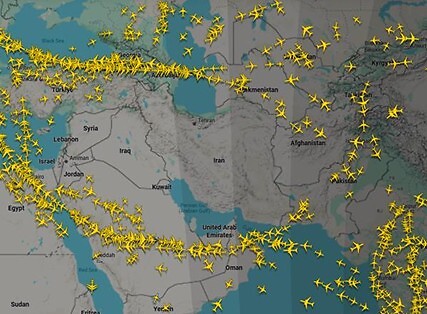
Source: Flightradar24 – 09 March 2026
As a result:
- Cargo capacity remains very tight across several trade lanes
- Demand continues to exceed available space
- Airlines are operating longer routings to avoid conflict zones
These longer routings are significantly increasing fuel consumption and operational costs. Fuel prices have risen sharply, with oil prices exceeding USD 107 per barrel, and carriers have announced significant fuel surcharges in reaction to that.
With an estimated 15% of global air cargo capacity currently impacted, the market is beginning to experience upward pressure on rates across multiple trade lanes worldwide.
Regions that traditionally rely heavily on Gulf carrier capacity - particularly Southeast Asia - is experiencing noticeable impacts as airlines adjust routings and available lift.
To mitigate these constraints, GEODIS teams are actively exploring alternative capacity solutions, including dedicated charter options, additional capacity from Greater China to Mexico, as well as alternative routing solutions via Oman or Saudi Arabia. Customers interested in exploring these alternative solutions are encouraged to contact their usual GEODIS representative.
Ocean Freight – Vessel Disruption & Container Management
Ocean freight operations into and out of the Gulf remain subject to operational adjustments as shipping lines continue to adapt to the evolving security situation.
Many carriers have implemented “Last Voyage” policies for vessels currently entering or exiting the Persian Gulf.
Under this policy:
- Containers may be discharged at alternative ports earlier than originally planned
- Shippers may be required to organize the repositioning or repatriation of containers
- Additional charges per container may apply depending on the carrier and operational conditions.
GEODIS offices are actively tracking containers currently located in the Gulf region in order to coordinate cargo repatriation and minimize disruptions.
Customers whose shipments may be affected by these measures have been contacted directly by our local teams.
This situation may also create a ripple effect on global container availability and vessel rotations, as ships delayed or unable to access the Gulf disrupt normal equipment circulation.
The map below illustrates the current areas of congestion and supply chain disruption resulting from the ongoing crisis.
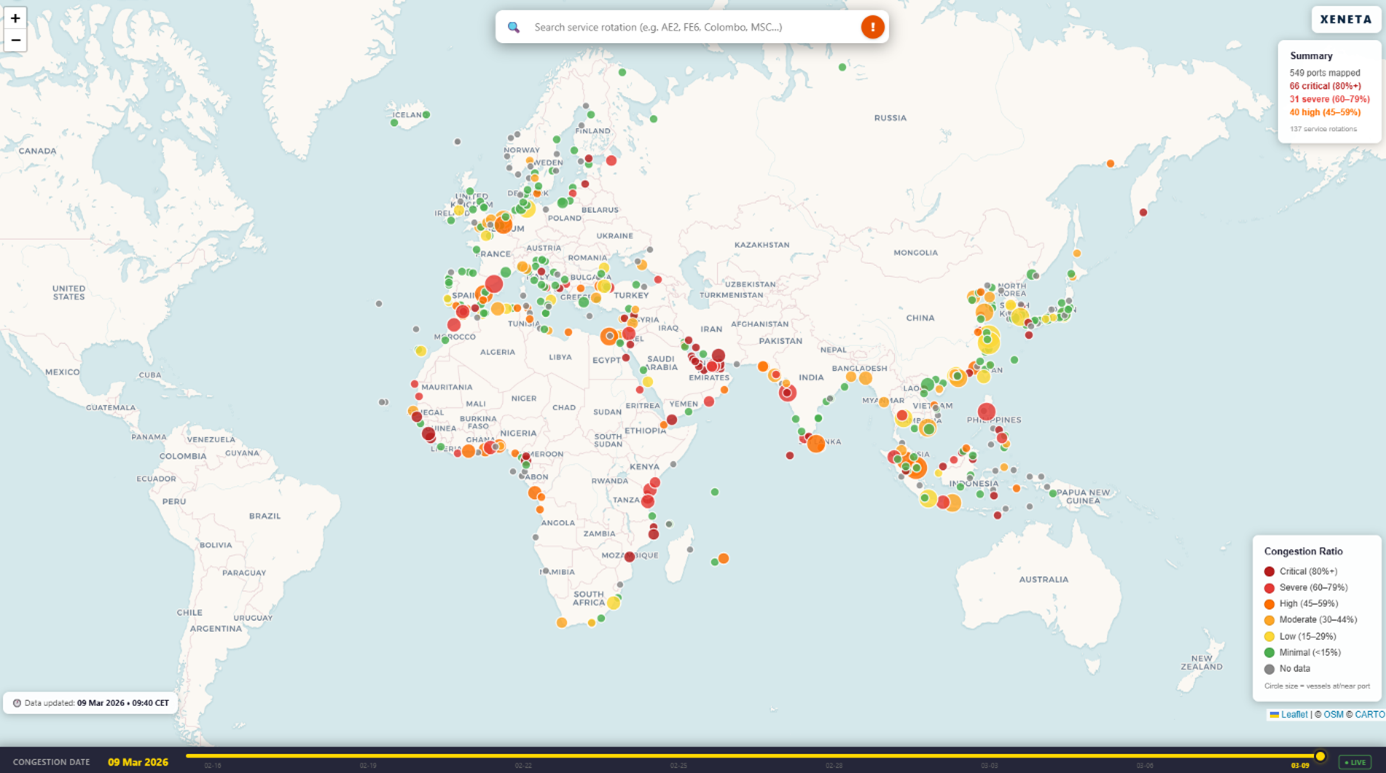
Source: Xeneta – Global Supply Chain Disruption Map - 09 March 2026, 09:40 CET
For the time being, routing via the Cape of Good Hope remains the primary alternative maritime corridor, and this situation is expected to continue for the coming weeks.
For shipments where containers are currently blocked or impacted within the Gulf region, additional operational handling or monitoring charges may apply on a case-by-case basis, depending on the specific situation.
GEODIS Monitoring & Customer Guidance
GEODIS teams remain fully mobilized to closely monitor the evolving situation and support customers throughout this period of disruption.
Our teams are actively:
- Tracking affected shipments and containers in the region
- Monitoring carrier operational updates and network adjustments
- Evaluating alternative routing options where feasible
- Supporting customers with tailored logistics solutions when disruptions occur
Given the evolving operational environment, we recommend that customers:
- Contact their usual GEODIS representative before initiating shipments involving Middle East destinations or transit points
- Anticipate potential capacity constraints and rate volatility, particularly fuel-related adjustments
- Plan shipments as early as possible due to reduced capacity and potential rerouting.
Should you experience any difficulty related to shipments currently affected by the situation, please do not hesitate to contact your GEODIS representative or local GEODIS office.
06 March 2026
MIDDLE EAST SITUATION - ALTERNATIVE LOGISTICS SOLUTIONS UPDATE
Dear Valued Customers,
As the situation in the Middle East continues to evolve, transport networks across the region remain subject to operational disruptions and capacity constraints.
In response, GEODIS teams are working closely with carriers and regional partners to identify and deploy alternative logistics solutions aimed at maintaining supply chain continuity for our customers.
We would like to share the latest developments regarding several routing options currently available or under implementation.
Air Freight – Gradual Recovery of Regional Capacity
Regional carriers have begun progressively restoring cargo operations across the Gulf.
Emirates SkyCargo and Etihad Cargo have resumed limited freighter and passenger operations and have started accepting transit cargo via Dubai and Abu Dhabi from several Asian origins. Initial freighter rotations have already operated between key Asian hubs and the UAE.
Looking ahead:
- Emirates SkyCargo plans to activate its freighter network to 19 destinations starting 7 March 2026, in addition to passenger repatriation flights to more than 70 destinations.
- Etihad Cargo resumed limited commercial flights on 6 March, with a freighter network expected from 10 March.
- Qatar Airways Cargo is currently planning to resume freighter operations from 11 March, subject to final approvals.
While capacity between Asia and Europe remains operational, rates are increasing as airlines adjust routings and payload limitations due to longer flight paths. Some carriers are also reducing block space commitments in response to these operational constraints.
Current operations remain focused on clearing cargo backlogs and prioritizing essential goods such as pharmaceuticals and perishables.
Alternative Routing Solutions via Oman and Regional Hubs
To mitigate disruptions affecting logistics flows into the Gulf region, GEODIS has implemented alternative routing solutions leveraging regional gateways across the countries of the GCC (Gulf Cooperation Council), combining air, ocean and cross-border transport solutions.
Air Freight solutions
- Muscat (Oman) – Air cargo can be routed via Muscat International Airport (MCT), with bonded trucking connections enabling onward distribution to the United Arab Emirates, Qatar, Saudi Arabia and Bahrain.
- Riyadh (Saudi Arabia) – Riyadh is also being used as an alternative air gateway, with regional road connections supporting cargo distribution across GCC markets.
Ocean Freight solution
- Jeddah (Saudi Arabia) – Jeddah port is increasingly being used as a regional maritime gateway, with bonded inland transport enabling cargo distribution to Riyadh, Dammam and other GCC destinations.
Customers interested in evaluating these solutions are encouraged to contact their usual GEODIS representative.
Ocean Freight – Network Adjustments
Ocean freight operations in and out of the Gulf remain operational, with carriers continuing to adjust their networks and routing strategies.
In response to ongoing disruptions, certain regional ports are increasingly being used as alternative entry hubs for container flows into the region, notably:
- Khor Fakkan (UAE) used by carriers such as MSC and CMA CGM
- Jeddah (Saudi Arabia) used by carriers including Hapag-Lloyd and Maersk
Inland Multimodal Corridor via Turkey
In addition to maritime alternatives, inland transport corridors via Turkey are currently being utilized to support cargo movements toward the Middle East.
These solutions combine trucking and multimodal transport across regional land corridors, providing an alternative to constrained maritime and air routes.
While these corridors remain operational, transit times may vary depending on border procedures and evolving security conditions.
GEODIS teams continue to monitor these routes closely to ensure operational reliability and cargo safety.
GEODIS Coordination
Our global teams remain fully mobilized to:
- monitor carrier and regulatory developments
- secure available transport capacity
- deploy alternative routing solutions
- support customers in adapting their logistics flows
Given the dynamic nature of the situation, we recommend contacting your usual GEODIS representative before initiating shipments involving the Middle East.
Further updates will be shared as reliable information becomes available.
05 March 2026
MIDDLE EAST SITUATION - OPERATIONAL UPDATE & ALTERNATIVE LOGISTICS SOLUTIONS
Dear Valued Customers,
As the situation in the Middle East continues to evolve, transport networks across the region are gradually adapting. GEODIS teams are actively working with carriers and regional partners to identify and implement alternative routing solutions to support supply chain continuity.
With safety as our top priority, GEODIS warehouse operations in the United Arab Emirates (Dubai and Abu Dhabi) resumed today under controlled conditions and operational time windows with essential staff. In the meantime, our teams are working remotely and remain fully mobilized to ensure that all cargo operations continue to be closely monitored and managed.
Air Freight – Gradual Recovery of Capacity
Regional carriers have begun progressively restoring cargo operations.
Key developments include:
- Emirates SkyCargo and Etihad Cargo have announced the progressive relaunch of freighter services towards Asia-Pacific and Europe.
- Current operations are primarily focused on clearing existing backlogs and transporting essential goods, including pharmaceuticals and perishables.
- New bookings remain possible but are currently subject to premium pricing due to limited capacity.
- Qatar Airways Cargo has indicated a potential resumption of operations from 8 March.
- Capacity between Asia and Europe remains tight but operational.
Ocean Freight – Carrier Network Adjustments
Ocean carriers continue to adapt their networks in response to the evolving situation.
Current developments include:
- Several carriers have temporarily stopped accepting bookings to the Persian Gulf, while continuing to accept cargo destined for Red Sea ports.
- Some vessels that departed Jebel Ali are currently holding position in the Gulf awaiting security clearance.
- Hapag-Lloyd has announced the deployment of feeder services between Salalah (Oman) and Jebel Ali.
- MSC is preparing weekly calls to Khor Fakkan (UAE) as an alternative regional gateway.
At the same time, carriers are introducing additional surcharges and rate adjustments, which are increasingly impacting multiple trade lanes globally as networks adjust to the ongoing situation.
Emergency Fuel Surcharges are expected to be extended to additional trade lanes as energy costs continue to rise.
Available Options:
- Delivery at contingency port (BL accomplished). The equipment must be returned in at contingency port.
- Delivery to the place of your choice by road or rail, subject to agreement on price and availability.
- Change Of Destination (COD) to the port of your choice, subject to agreement on price, service & port availability in the current circumstances.
All costs arising from the application of the above Bill of Lading provisions shall be for the account of the cargo.
Regional trucking corridors
Road freight via the Turkey – Syria – Jordan – Iraq corridor is currently operating without disruption for ongoing shipments.
Suppliers operating further south have confirmed that no major disruptions are currently affecting these inland routes, although operational checks continue to be performed prior to each shipment due to the evolving situation.
GEODIS Coordination
Our global teams remain fully mobilized to:
- monitor airlines and carriers network developments
- secure available capacity
- identify reliable routing alternatives
Guidance for our Customers
Given the evolving operational environment, we recommend that customers:
- contact their usual GEODIS representative before initiating shipments involving the Middle East
- confirm bookings as early as possible due to limited capacity
- anticipate possible rerouting and transit time adjustments
Further updates will be shared as reliable information becomes available.
We remain fully committed to supporting your logistics operations and ensuring supply chain continuity.
04 March 2026
MIDDLE EAST SITUATION - OPERATIONAL UPDATE & ALTERNATIVE LOGISTICS SOLUTIONS
Dear Valued Customers,
Further to our previous advisories regarding the evolving situation in the Middle East, we would like to provide an update focusing on alternative logistics solutions currently being evaluated to support supply chain continuity.
While operational conditions across the region remain volatile, GEODIS teams are actively working to identify alternative routing strategies across air, ocean and multimodal networks.
Air Freight – Capacity Constraints
Air cargo capacity across the Middle East region remains significantly constrained due to continued airspace restrictions and operational limitations affecting several regional hubs.
While limited flight activity has resumed through designated emergency corridors at major UAE airports, available capacity remains restricted and irregular.
Several carriers have begun operating very limited freighter or repositioning flights, primarily supporting repatriation movements or priority cargo. At the same time, many international carriers continue to avoid Middle East airspace, forcing longer routing patterns.
As a result:
- cargo capacity remains limited
- freight demand remains high
- rates are increasing on several key trade lanes
- transit times may be extended due to rerouting requirements.
Alternative Logistics Solutions
To mitigate disruptions and maintain cargo flows, GEODIS teams are actively evaluating alternative logistics solutions.
Sea-Air Solutions
Sea-Air solutions are currently being evaluated for selected flows in order to bypass constrained air corridors while maintaining reasonable transit times.
These multimodal solutions combine ocean freight to alternative gateway hubs followed by air uplift to final destinations, providing additional flexibility where direct air capacity remains limited.
Alternative Air Gateways
Indirect air routing options are also being assessed to connect Asia and Europe via alternative global hubs, including potential Air–Air solutions via North America, depending on operational feasibility and carrier capacity.
These routings may allow cargo to bypass heavily restricted Middle East air corridors.
Alternative Ocean Gateways
Inbound towards the Gulf, carriers are progressively adapting routing strategies.
Operational alternatives currently being explored include:
- Khor Fakkan (UAE) as a potential alternative gateway for cargo flows entering or leaving the Emirates
Sohar (Oman) as a discharge option for vessels adjusting routing strategies - limited cargo handling operations continuing through Jebel Ali under specific operational conditions.
Multimodal Inland Alternatives
Additional inland routing options are also being evaluated to access Gulf markets through neighboring countries, including:
- available access routes via Oman or Saudi Arabia, depending on access capacity into these two inbound gateways
- trucking corridors via Turkey
Guidance for Customers
Given the evolving operational environment, we recommend that customers:
- consult their usual GEODIS representative before initiating shipments involving Middle East destinations or transit points
- anticipate possible rerouting and transit-time adjustments
- confirm bookings as early as possible due to limited capacity.
Further updates will be shared as reliable information becomes available.
We remain fully mobilized to support your logistics operations and ensure supply chain continuity during this period.
03 March 2026
MIDDLE EAST SITUATION – NETWORK DISRUPTIONS & OPERATIONAL GUIDANCE
Dear Valued Customers,
Further to our previous advisories, we would like to provide a new consolidated operational update on the evolving Middle East situation and its impact on global transport networks.
Airspace and maritime restrictions across the region remain significant and subject to rapid regulatory updates. The central commercial Europe-Asia air corridor via the Gulf remains severely restricted, requiring widespread rerouting. The safety of our employees and partners remains our priority, and operations continue in line with local government directives.
Air Freight – Regional & Global Network Impact
Multiple Middle Eastern airspaces remain closed or heavily restricted, significantly disrupting the traditional Europe–Asia corridor via the Gulf.
While limited repatriation or ad-hoc flights are being operated under strict conditions, there has been no resumption of regular scheduled commercial services at this stage.
As a result:
- Carriers are rerouting flights around the conflict zone, reducing payload and aircraft rotations
- Technical stopovers previously operated in Gulf hubs have been suspended, further tightening capacity
- Longer routings are increasing fuel consumption and operational complexity
Operational conditions remain volatile, with frequent regulatory updates and short-notice aviation notices (NOTAM – official airspace restrictions issued by authorities) affecting scheduling and overall network stability.
Beyond the region, these disruptions are creating:
- Reduced Europe-Asia long-haul cargo elasticity
- Congestion at alternative hubs such as Istanbul, Athens, Cairo and Johannesburg
- Increasing rates volatility
- Potential upward pressure on fuel-related surcharges
In Asia, capacity is tightening as carriers rebalance networks. Alternative gateways and multimodal options, including potential sea/air solutions, are being evaluated.
Ocean Freight – Maritime Corridor Restrictions
Maritime traffic through the Strait of Hormuz remains suspended, significantly impacting vessel movements to and from the Persian Gulf.
Several carriers continue to limit or suspend new bookings to the region, while others are reassessing routing strategies to ensure vessel and crew safety.
Operational implications include:
- Potential rerouting of services via longer alternative corridors (e.g., around the Cape of Good Hope), which may extend transit times by approximately 10–20 additional days, depending on origin and destination
- Increased war-risk premiums and insurance-related surcharges
- Congestion risks at secondary or alternative ports
- Ongoing schedule adjustments as carriers rebalance vessel rotations
Cargo currently in transit may be subject to delays or revised routing decisions depending on carrier instructions. Schedule reliability remains volatile as networks continue to adapt.
Road Freight & Inland Operations
Road freight operations remain highly restricted in certain areas. Cross-border movements are limited and, in many cases, prioritized for authorized or humanitarian cargo only.
Where movements are permitted, customers should anticipate possible border congestion, customs processing delays and transit-time variability as security measures evolve.
Contract Logistics
Warehousing and contract logistics facilities in the region remain operational where authorized. Business continuity measures are in place.
Enhanced Shipment Visibility & GEODIS Actions
To reinforce transparency and streamline communication, GEODIS has implemented a dedicated shipment visibility dashboard developed by our IT teams.
All shipments identified as transit to the Middle East are consolidated and updated continuously. This enables structured monitoring and consistent, proactive communication.
Our teams are actively working to secure additional capacity, identify alternative gateways, and develop flexible routing solutions across air, ocean and multimodal options. Every available lever is being evaluated to maintain service continuity under evolving constraints.
Recommended Customer Actions
Given the current capacity constraints and operational volatility, we recommend:
- Sharing updated shipment forecasts to support forward capacity planning and secure available space.
- Confirming bookings as early as possible, as rerouting and reduced rotations may limit last-minute availability.
- Reviewing insurance coverage, including war-risk clauses, to ensure shipments remain adequately protected.
- Assessing safety stock levels, as extended or variable transit times may impact supply continuity.
Should you have any questions or require assistance, please contact your GEODIS representative.
02 March 2026
MIDDLE EAST SITUATION - CARRIER STATUS & CONTINGENCY MEASURES UPDATE
Dear Valued Customers,
Further to our previous communication, we would like to provide a consolidated update focusing on carrier operational status (air and ocean) and the contingency measures currently implemented by GEODIS, considering as a priority the safety of our people and partners.
Ongoing security developments and airspace closures across the region continue to generate significant disruptions to regional and international transportation flows.
Air Freight – Carrier Status
Airspace restrictions remain in place across multiple countries:
Iran, Iraq and Israel – Closed
Jordan, Kuwait, Bahrain, Qatar and the United Arab Emirates – Partially to fully restricted
Major Airport Disruptions
Dubai (DXB) – Operations suspended with widespread cancellations
Abu Dhabi (AUH) – Significant cancellations and diversions
Doha (DOH) – Flights largely suspended
Sharjah and Kuwait International – Widespread cancellations
Additional disruptions are affecting Baghdad, Bahrain and other regional gateways
Even airports technically open may not accept air freight operations due to surrounding airspace closures.
Temporary suspensions and operational adjustments have been announced by Lufthansa Cargo, Cargolux, Etihad Cargo, Cathay Cargo, Saudia Cargo and Turkish Airlines Cargo.
Ground handling operations at dnata Cargo (DXB and DWC) remain suspended until further notice. Airlines are implementing corridor deviations, increased fuel loads, payload limitations and revised insurance requirements, reducing available capacity across the region.
Network Impact
The disruption is not limited to traffic to and from the Middle East. As Gulf hubs play a significant role in connecting Europe, Asia and the Indian Subcontinent, reduced connectivity is beginning to impact certain Asia–Europe and Asia–India lanes. In the short to medium term, capacity constraints, rate volatility and extended transit times are expected.
Ocean Freight – Carrier Status
Due to the security situation affecting maritime transit corridors, major shipping lines have implemented precautionary measures.
Booking Restrictions
ONE (Ocean Network Express) – Temporary suspension of new bookings to and from the Persian Gulf
MSC – Suspension of bookings for worldwide cargo to the Middle East region
CMA CGM & Hapag Lloyd – Suspension of reefer bookings to/from defined Middle East destinations
Vessel Routing Measures
CMA CGM
o All vessels inside or bound to the Gulf have been instructed to proceed to shelter.
o Passage through the Suez Canal has been suspended, with vessels rerouted via the Cape of Good Hope.
Hapag-Lloyd (Gemini cooperation including Maersk)
o IMX Service sailings are being rerouted around the Cape of Good Hope.
o Trans-Suez sailings via Bab el-Mandeb are paused until further notice.
These measures are driven by crew safety, vessel security, and cargo protection considerations.
War Risk Surcharge
Various carriers have announced the implementation of War Risk Surcharges in response to the current security situation in the Middle East.
These surcharges may apply to cargo moving to, from, or via affected areas and are determined individually by each carrier, depending on routing, vessel exposure, operational risk, and insurance requirements.
GEODIS Contingency Plan
Our priority remains the continuity of your supply chain and the safety of cargo movements, while prioritizing the safety of people and operational resilience.
GEODIS has activated reinforced coordination across our global network:
o Ongoing tracking of carriers and regulatory developments
o Direct engagement with airlines and shipping lines regarding operational restrictions
o Identification of bookings currently impacted by the situation
o Proactive outreach to affected customers to provide visibility on shipment status and next steps as conditions evolve
o Evaluation of alternative routing options, where operationally feasible.
Guidance for our Customers
o Before initiating new bookings involving Middle East destinations or transit points, please consult your usual GEODIS representative to confirm the latest feasibility and routing options.
o Further updates will be shared as reliable information becomes available.
We understand the operational challenges this situation may create and remain fully committed to supporting your logistics needs during this period.
Should you have any questions or require assistance, please contact your GEODIS representative.
02 March 2026
MIDDLE EAST SITUATION - AIRSPACE CLOSURES & POTENTIAL DISRUPTIONS
Dear Valued Customers,
Due to the ongoing escalation in the Middle East, significant disruptions are currently affecting airspace and airport operations across parts of the region, with direct consequences for international transportation flows.
Situation Overview
Recent developments have led several countries in the Middle East to close or significantly restrict their airspace, resulting in widespread flight cancellations, airport suspensions, and major rerouting of air services.
Impact on Air Transportation
- Major hubs such as Dubai International Airport (DXB), along with other regional airports, have suspended or limited flight operations until further notice.
- Airspace over countries including Iran, Iraq, Kuwait, Qatar, Israel, Jordan and the United Arab Emirates is reported to be closed or subject to operational restrictions, leading to cancellations and diversions of scheduled services.
- Numerous international airlines have temporarily suspended flights or adjusted routings to avoid the affected airspace, significantly impacting connectivity between Europe, Asia, North America, and the Middle East.
Operational Measures and Mitigation Actions
- Our operational teams are closely monitoring developments on a continuous basis.
- We are actively reviewing shipment routings and adjusting transit plans to mitigate delays where feasible.
- We remain in close contact with airline partners and local authorities to assess operational constraints and secure alternative capacity where available.
Maritime Disruptions – Strait of Hormuz Closure
Iran has announced the closure of the Strait of Hormuz. This closure restricts vessel movements from the Persian Gulf and limits access to major hubs such as Jebel Ali, impacting global ocean trade.
At this time, there is no maritime alternative route to the Persian Gulf.
Furthermore, sea port operations in the United Arab Emirates, Bahrain, Qatar and Saudi Arabia (with the exception of Jeddah Islamic Port) have been suspended until further notice.
Guidance for our Customers
- Customers with shipments to or from the region are encouraged to remain in close contact with their usual GEODIS representative for updates specific to their flows.
- For airfreight bookings or planned departures involving the Middle East, please anticipate potential delays, reroutes, or transit time adjustments.
- Further updates will be shared as reliable information becomes available.
We understand the operational challenges this situation may create and remain fully committed to supporting your logistics needs during this period.
Should you have any questions or require assistance, please contact your GEODIS representative.