Rail transport


Rail freight carries bulk commodities and containerised goods over fixed steel-track corridors, offering high capacity, reliability and up to 6 × lower CO₂ per tonne-kilometre than long-haul trucking.

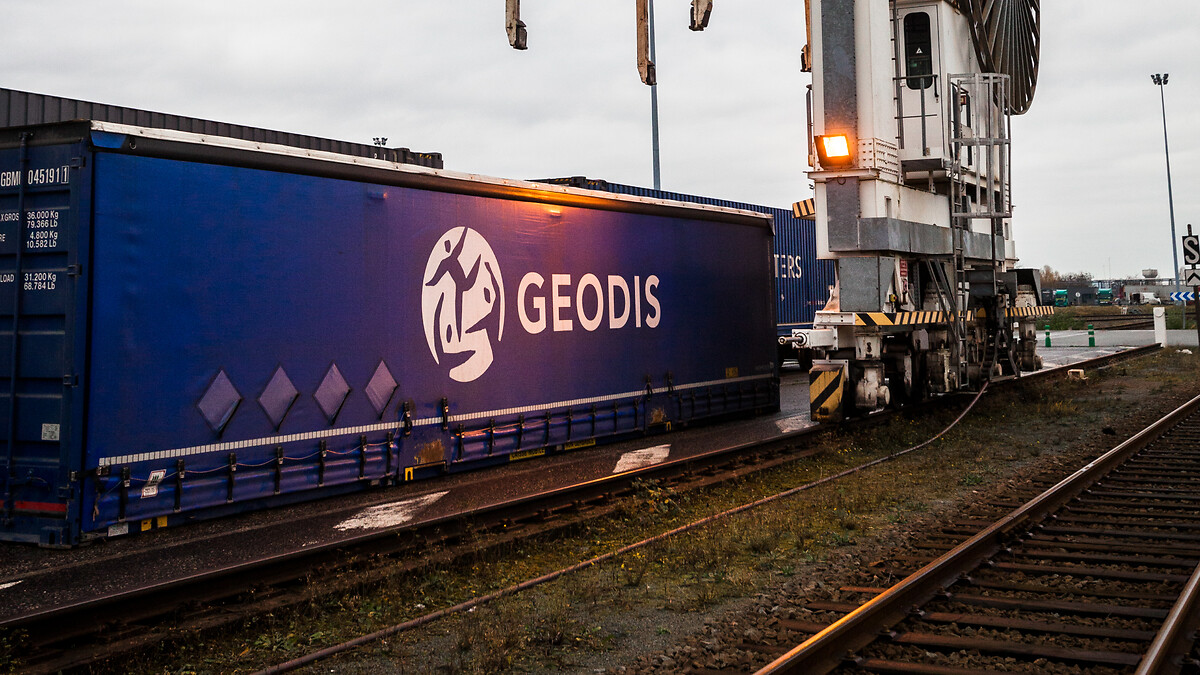
Road-Italy_Website-Visual_Portique de manutention au Terminal de transport combiné Delta 3-VOGEL Franck.jpg

How large is the rail-freight market in 2025 and where is it heading?


 Research & Markets pegs the global rail-transport market at USD 525 billion in 2024 with freight representing a little over half. The sector is forecast to reach ≈ USD 932 billion by 2034, a 6.2 % CAGR, propelled by decarbonation policies, near-shoring and intermodal growth. 

Which documents are required for international rail shipments?


  • CIM consignment note - the contract of carriage under the COTIF convention; now available in e-CIM format with QR/PKI security.digitalizetrade.org
  • Commercial invoice & packing list - value, HS code, weight.
  • Dangerous-goods declaration (RID) - rail equivalent of IMDG/ADR.
  • Certificates of origin / sanitary papers where required.

Digitising the CIM note cuts manual data entry by 70 % and enables straight-through customs clearance.  

What performance KPIs define rail-freight quality?


  • On-time departure/arrival (OTP) - benchmark ≥ 90 %.
  • Terminal dwell time - < 24 h for maritime-rail hubs; poor dwell erodes asset turns.
  • Damage ratio - < 0.2 % for intermodal units.
  • CO₂ g/t-km - 17 g median in EU (road ≈ 111 g). 

Dashboards now blend these KPIs with cost/TEU and carbon intensity in line with the GLEC Framework v3 (ISO 14083).  

How does rail compare with road on emissions and cost?


The latest EU Rail Environmental Report confirms freight trains emit ≈ 75% less CO₂ per tonne-km than heavy-duty trucks and impose lower externalities (noise, congestion, accident risk).

A 2025 UK cost study shows rail’s average €0.036/t-km versus €0.046 to 0.062 for road, despite higher first/last-mile drayage. 
What are the busiest Eurasian and European rail corridors in 2025?


  • China-Europe Railway Express (CER) - over 100 000 cumulative trips and 10% YoY TEU growth in 2024. BTK southern route upgrade cut transit time between Yuxinou (Chongqing)-Duisburg to 15 days.
  • North Sea–Baltic RFC #2 - key for Pomeranian ports, automotive flows.
  • ScanMed RFC #3 - food, timber and pharma linking Scandinavia to Italy.
  • Middle Corridor (Alat–Constanţa) - Russia-free China - EU option gaining double-stack clearance in 2025.

ETCS Level 2/3 deployment on these corridors delivers 30 % headway gains and international driver-less handover.  

How are technology and policy accelerating rail-freight uptake?


  • Digital twins optimize slot allocation and disruption recovery.
  • IoT-equipped wagons provide real-time shock/temperature data.
  • Green Track Access Charges (Germany, Netherlands 2026) reward low-noise, hybrid or hydrogen locomotives with fee rebates.
  • EU Greening Freight Package (2023--) targets a +50 % rail-freight share by 2030 with streamlined border procedures and harmonized noise caps.