Order Fulfillment


Order fulfillment is the end-to-end process of receiving a customer order, allocating inventory, picking, packing, shipping, and, when needed, handling returns or exchanges.


An order-fulfillment cycle starts when an Order Management System (OMS) releases demand to the Warehouse Management System (WMS). Inventory is assigned to the optimal node, pick waves are released, and operators - often supported by goods-to-person robots, RF or voice terminals - prepare the items. Quality checks, cartonization algorithms, and carrier-label printing follow before parcels are handed off to the transportation network and tracking data flows back to sales channels. 


Core KPIs include order accuracy, on-time shipping (usually “same-day” or “next-day” cut-off), order-cycle time, cost per order, and carbon grams per shipment. Modern platforms expose real-time dashboards so exceptions (stockouts, carrier delays) can be resolved before they hit OTIF commitments.
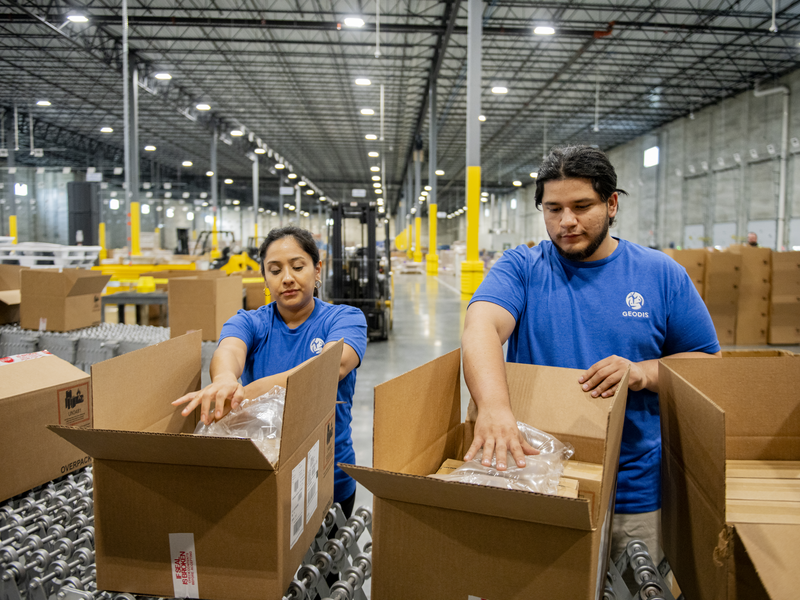
PICT075555-Teammates adding protective materials to a box before shipping-HILLER Eli.png

FAQ


What is the difference between fulfillment and distribution?

Fulfillment focuses on parcel-level pick-pack-ship to consumers or stores, while distribution covers pallet or case movements in bulk across a wider B2B network.


How is order-cycle time measured?

From the time an order drops in the OMS to carrier hand-off. Best-in-class eCommerce operations achieve < 2 hours for same-day cut-off orders.


Which technologies boost fulfillment efficiency most?

Goods-to-person robots, automated sortation, dynamic cartonization, and API-level integrations between OMS/WMS/TMS reduce both touches and errors.


How do brands cut the carbon footprint of fulfillment?

By positioning inventory closer to demand, choosing ground over air where possible, and using cartonization to minimize cube—and by selecting 3PLs like GEODIS that publish grams-CO₂ per parcel dashboards.