
09/15/2026
Optimizing Workforce Cost and Efficiency for Our Logistics Clients
How GEODIS uses AI-driven labor forecasting to rightsize its workforce, reduce labor costs, and meet client SLAs, with results from a two-facility pilot.
GEODIS is investing in new, AI-driven labor forecasting tools to reduce workforce costs while enhancing the logistics services we provide to our clients.
Labor planning is a vital part of understanding and predicting the current and future demands on a logistics business and how those demands will affect the workforce. Accurate planning allows HR and Operations to make informed, data-driven decisions on hiring, retaining, upskilling, and managing employees.
Strong labor forecasts align the size, scope, and capabilities of the supply chain workforce with business and client requirements. This ensures cost-effective, optimized operations while meeting all client commitments and service level agreements (SLAs).
Labor planning matters because a strong, skilled, rightsized workforce is foundational to running a healthy logistics business and providing supply chain services to clients. Key benefits include:
- Deep understanding of current business operations and workforce deployment.
- Early awareness of changing client needs, and the labor resources required to meet them.
- Shortened lead times on the hiring and training of temporary and permanent employees.
- Alignment of workforce capabilities with projected future demand, in both size and roles.
- Achievement of client requirements and SLAs throughout regular and peak seasons.
- Rapid adaptation to changing circumstances and external factors.
- Reduced labor workforce costs that generate savings and value for clients.
At GEODIS, we're going beyond standard labor planning and embracing a more dynamic, AI-driven labor forecasting model. As our clients' needs grow, we need to stay ahead, ensuring that we can meet their increasing demand.
Our new approach to labor planning makes us more agile and able to optimize our workforce based on client needs, operational factors, seasonal changes, and other areas. That's why we've developed two similar but independent labor planning tools:
- A tactical labor-forecasting tool that our facilities teams use to manage day-to-day operations.
- A strategic staff-forecasting tool that our HR teams use to hire and manage the workforce over the long term.
We combine these tools to create a single labor forecasting approach. This approach brings together the latest in data analytics, AI and forecasting algorithms, HR best practices, demand planning, and workforce management. Our new approach is largely automated, and although there is still some manual intervention, it is significantly reduced compared to traditional labor forecasting.
Our pilot findings have been very positive. We increased shipping volumes for our pilot client by 15%, while reducing labor costs by 11%.
We're now deploying our new labor planning approach across our contract logistics client accounts to ensure we provide consistent logistics services across all of our operations. Even better, we redeploy our labor savings to our clients' value-adding activities at no additional cost.
Key takeaways
- Our pilot project with a large high-tech provider demonstrated that we reduced labor costs by 11% and increased unit volumes shipped by 15% while continuing to meet and exceed all SLAs.
- Strong labor forecasting allows us to align our logistics with changing client demands and to accurately plan for peak seasons while reducing inefficiencies and costs.
- Our tools and approach support data-driven decision-making so that we can optimize workforce planning and operations.
- We use multiple inputs, processing algorithms, and outputs to closely match our labor to current and future client requirements.
Our labor forecasting tools and approach are available to all GEODIS contract logistics clients at no extra cost. Any labor we save through using this approach will be redirected to value-adding operations for our client businesses.
Please note that GEODIS has implemented two separate but related workforce forecasting tools, for both day-to-day operational planning and long-term strategic planning. To avoid confusion in this article, we'll be emphasizing our overall, combined approach to labor forecasting and planning, rather than discussing the technical details and intricacies of each tool.
The structure of this article
Labor forecasting can be complex. We've broken this article into several sections that explore the importance of predictive workforce planning and what it means to our clients:
- The potential issues caused by having an incorrectly sized workforce.
- How existing labor planning methods work.
- Why we're investing in labor forecasting on behalf of our business and our clients.
- The benefits you can expect as we implement labor forecasting across our client accounts.
- A high-level view of our labor forecasting approach and how it functions.
- Features of our workforce planning approach.
- How we build and train our predictive models.
- The outputs and reports produced by labor forecasting.
- Findings from our pilot projects.
- How our labor forecasting will benefit you.
Discover how our labor forecasting and planning will make your warehouse operations more efficient. Get in touch with GEODIS.
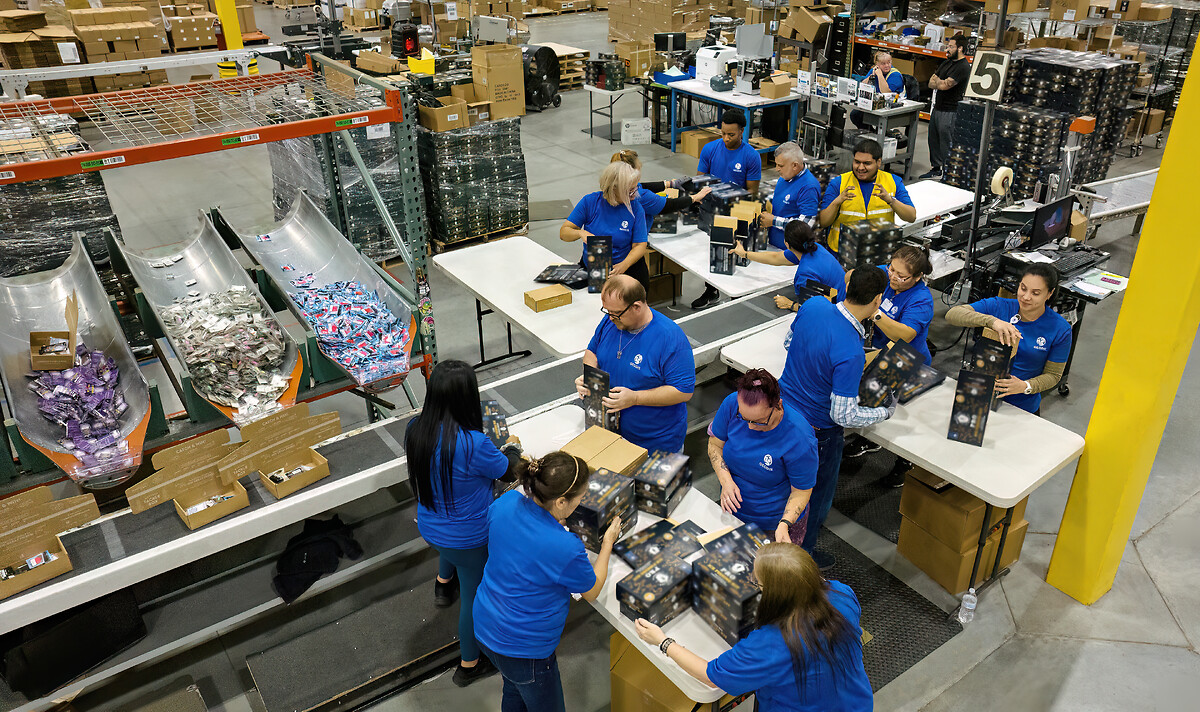
Issues caused by a wrong-sized workforce
Incorrect labor planning can cause several issues for logistics businesses and their clients.
Misalignment with current and future client demands
Logistics services need to stay ahead of likely client requirements and end-consumer demand for products. Failing to do this results in a lack of capacity in operational teams, meaning a lack of product availability, delays in delivery, and unhappy consumers. All of that can lead to poor brand perception and have an impact on the bottom line.
An efficient supply chain relies on a wide variety of expertise across facilities, accounts, and operations. Inbound logistics, warehousing, inventory counting, picking, packing, distribution, and value-added services each require a slightly different skill set. Shifting client demands subtly influence each of these areas, requiring the careful redeployment of resources. Labor planning allows our strategic and operational teams to react quickly to changes in demand to minimize disruption.
Insufficient planning for changes in client demand
Even if a logistics business has a good understanding of changing demand, it has to take action early enough to get the right workforce in place. There can be a significant lead time in getting employees "on the ground."
From understanding role requirements to advertising for employees, getting candidates, arranging interviews, onboarding employees, and providing training, lead times can run between one and two months. This can be lengthened further in competitive labor markets and before peak seasons. Labor planning ensures that we understand requirements well ahead of time and can manage lead times accordingly.
Not reacting quickly to unusual events
The world is unpredictable. Changing economic and political circumstances, natural disasters, Black Swan events, and other situations can significantly affect supply chains and lead to product shortages. Labor planning allows us to quickly reassign and flex our workforce in line with unusual events. It helps us build an extra layer into risk management and mitigation, providing a contingency for logistics services.
Increased inefficiencies and costs
Labor is a primary cost driver for logistics businesses. An oversized workforce creates additional costs that are likely to be passed on to clients. Close alignment between client needs and workforce size allows for rapid redeployment of employees to value-adding client activities and allows for the more efficient use of labor.
Labor planning methods in use before our AI-driven approach
Prior to our new, AI-driven approach, our traditional forecasting method was based on sophisticated, manual data analysis. Traditional workforce planning relies on an advanced Excel data model. At a high level, it works as follows:
- Gather scheduled rosters across our facilities.
- Confirm how many employees we have assigned to specific roles and clients within the warehouse.
- Adjust these levels for factors such as vacations and shift patterns.
- Apply attendance assumptions and productivity rates for the facility.
- Calculate our required workforce capacity to meet facility and client needs.
Provide these numbers to operations so they can amend shift patterns accordingly.
Benefits of a traditional labor-planning approach
We've based our Excel data model on industry best practices for traditional workforce planning. This approach allows us to maintain workforce levels while meeting client SLAs.
Drawbacks of a traditional labor-planning approach
The data gathering, analysis, calculation, and operational planning processes rely on manual inputs and adjustments. Although we can work around this, our move to an AI-driven approach is increasing the efficiency of our workforce planners and operations teams.
Manual labor planning also makes some assumptions about patterns and trends that need to be manually updated to ensure they align with our data. We regularly review these trends and other assumptions to accurately match client needs and throughput.
Manual forecasting creates significant administrative overhead for our operational teams.
Find out how our workforce planning optimizes the warehouse operations that we run for you. Get in touch with GEODIS.
Why GEODIS is investing in workforce planning
Our investment in our labor planning is driven by several of our client-centric, high-level business goals:
- Total satisfaction for our clients, employees, shareholders, and society at large.
- Helping clients succeed by overcoming their logistical constraints.
- Supporting our clients' growth.
We achieve total satisfaction for our clients by delivering reliable logistics services, according to the commitments and SLAs we have agreed. Investing in labor forecasting ensures we have skilled people in place who can deliver those services.
It's also vital that we maintain satisfaction for our employees, and labor planning ensures they're supported in their roles. Investing in labor forecasting helps us employ skilled, happy teammates and removes the risk of overwork, without compromising our operations.
We help our clients overcome their logistics constraints by providing comprehensive, flexible, and scalable services. Investing in labor forecasting means we can ramp our workforce up and down in a cost-effective way based on changing client demands.
When it comes to supporting client growth, labor forecasting allows us to understand future client requirements and build in workforce expansion and contraction for peak and regular seasons. This ensures we can align our headcount and capabilities as our clients expand their offerings and marketing.
Finally, our pilot project shows that we can achieve significant, sustainable cost reductions for our clients, even as unit volumes and throughput increase. We can then redeploy that saved labor to value-adding activities for our clients, further enhancing our services and satisfaction.

Benefits of the new GEODIS labor forecasting approach
Our approach provides significant benefits to our clients.
Aligning our future workforce capabilities using objective, data-driven decision-making
Data science and machine learning help us gather and analyze multiple inputs and data sources. We use a rigorous and proven approach that accurately predicts future workforce needs to ensure close alignment between client demands, product volumes, operational changes, and external factors. We forecast a reliable baseline and precise headcount that drive our operational and HR workforce decisions.
Understanding our clients' future capacity, demand, and workforce needs
The demand, capacity, and throughput of client products vary widely, influenced by time of year, promotional activities, availability, and several other factors. We regularly meet with clients to understand future growth requirements and incorporate these into our third-party logistics (3PL) services.
Our forecasting approach analyzes this demand and predicts future workforce levels and bandwidth so we can properly support all types of expansion. Workforce forecasts mean we can adapt to organic growth, new projects, product releases, and multiple other factors. We also provide our clients with visibility into historical and future trends for better inventory planning.
Improving HR lead times to hire for regular and peak seasons
It takes between four to six weeks to hire a warehouse employee, [URL] and competition for workers can be intense before peak season. Accurate labor forecasting allows us to understand our workforce needs well in advance so we can plan for hiring lead times. This ensures we have the right ramp-up, ramp-down, and mix of permanent, temporary, and seasonal employees to meet client needs during all seasons.
Enhancing operational efficiencies to meet client SLAs in a cost-effective way
We provide strong SLAs to help our clients delight their customers. Effective labor forecasting means we can deliver on these SLAs while optimizing costs. Proper workforce planning allows us to flex and redirect labor to value-adding activities for our clients and reduce waste and inefficiency.
Creating the right mix of workforce skills for all 3PL services
We offer a wide range of 3PL services that require diverse labor skills. Our forecasting approach predicts granular activities throughout our operations and ensures we always have properly skilled staff in place. This means we deliver regular and value-added services throughout our contract logistics operations.
Managing risks around supply chain disruptions and unusual circumstances
Supply chains can be disrupted in several ways. Delays and bottlenecks can slow products arriving at our warehouses, while bigger issues can cause widespread and ongoing disruption. Labor forecasting allows us to react quickly to such events so that we can manage risks and maintain service levels. Our operations teams can adjust forecasts based on unexpected external factors and quickly predict changes in workforce levels to maintain high levels of service.
Reducing the cost of labor while improving shipping volumes
One of the main benefits for our clients is significant cost reduction. Our pilot project with a large consumer electronics brand showed labor savings of around 11%. We were able to simultaneously improve shipping volumes and throughput by 15% and reduce costs. Labor savings can then be redirected to value-adding activities for our clients.
Optimizing every distribution channel and route to market
Our clients have several routes to market and distribution channels: direct to consumer, wholesale, retail, repairs and replacements, and more. Strong labor planning lets us optimize the workforce for every type of distribution, providing high-quality services to all end customers.
Removing much of the administrative burden of manual labor forecasting
Before using this tool, we performed the majority of our labor planning using an Excel data model. Although this model provides reliable outputs and forecasts, it's a manual tool that creates an administrative overhead for our planning and operations teams.
Our new approach removes that burden. We can see daily trend analysis and updates, can ramp our workforce up and down quickly, and account for our employees' skills, capabilities, shift patterns, and many other factors. This eliminates many hours of administrative work and we do not need to rely on assumptions about future needs.
Overview and features of our new labor planning and forecasting approach
Our AI-driven labor forecasting approach jointly benefits GEODIS and our clients. From our perspective, it ensures we have a rightsized workforce to deliver high-quality logistics services. From our clients' perspectives, it means you can effortlessly meet your commitments to your customers.
We approach labor planning and forecasting from both a short-term operational perspective and a long-term strategic approach. Our new tools replace significant parts of the manual planning process, and we're able to automate significant portions of our forecasting. We do still use some manual intervention to verify and refine our outputs and make adjustments.
Operational workforce forecasting and planning overview
Our operational forecasting allows our facilities teams to accurately predict day-to-day workforce levels based on volumes and client needs. It considers several logistics areas:
- Future supply, demand, growth, and capacity requirements.
- Current product flows and order levels from our clients and their customers.
- Historical, time-based trends and peak seasons.
- The number of people required in specific logistics functions and job roles such as receiving, storage, picking, packing, and distribution.
We assign our employees to the right roles on a daily basis across each part of our operations. We can also quickly vary workforce support due to operational variations. Our operational approach specializes in:
- Day-to-day logistics processing.
- Labor and volume planning through accurate day-level forecast numbers.
- Granular insights across areas like volumes received, specific job codes, and distribution channels.
Outputs for strategic forecasting to ensure we have an appropriate headcount at all times across all seasons and accounts.
Features of operational workforce forecasting and planning
Our operational planning approach enhances operations labor and volume planning by providing accurate forecast numbers across all of our contract logistics services. Key features include:
- Taking multiple inputs that determine workforce needs based on volume, seasonal requirements, client forecasts, historical trends, and several other areas.
- Providing multiple types of segmentation, planning, and reporting, such as by campus, profit center, client, shift, distribution channel, line of business, and a combination of these factors.
- Offering an operational view of client accounts and workforce requirements across many operational areas.
- Predicting the number of units moving through the warehouse including inbound and outbound volumes.
- Using a forecast algorithm to generate accurate predictions for labor requirements including workforce size, split of roles, ratio between temporary and permanent employees, and other areas.
- Generating workforce requirements by hours required and headcount over days and weeks.
- Modeling disruptions, marketing, promotions, and other external factors.
- Allowing operations to quickly adjust workforce resources to meet client SLAs.
- Feeding into our strategic planning for longer-term workforce management and hiring decisions.
Reducing labor costs while maintaining and improving shipping volumes and product throughput.
Strategic workforce planning and hiring overview
Operational planning is a powerful approach for day-to-day operations, but we're also thinking over the long term when it comes to rightsizing our workforce. Our HR teams use a strategic approach to accurately predict long-term headcount requirements across our facilities, operations, and clients.
We use several areas to define our strategic staffing requirements:
- Feedback from our mid- to long-term operational planning tells us how many Full-Time Equivalent (FTE) employees will be required for each client account over the coming year.
- The required split between permanent, temporary, and seasonal employees so that we can meet all staffing requirements across regular and peak seasons.
- Manual updates made by our operations teams to account for specialized client requirements, growth, and other factors.
Our strategic planning approach allows us to compare our predicted workforce needs against our existing headcount and tells us where to hire to fill those gaps. This includes:
- A year-ahead view of staffing requirements and predicted workforce size.
- Support of HR planning and hiring.
- Rightsized, planned workforce recruitment through accurate forecasts and appropriate lead times.
- Ongoing, strategic support of client accounts through hiring a combination of permanent, temporary, and seasonal workers.
Long-term flexibility to meet changing client demand levels.
Features of strategic workforce planning and hiring
Our strategic approach helps HR understand, manage, and execute workforce staffing requirements. Key features include:
- Using the long-term, strategic forecast from our operational planning to forecast workforce FTE requirements for each client over the next year.
- Splitting forecast FTE requirements into permanent, seasonal, and temporary employee requirements.
- Showing the variances between previous forecasts and actual labor needs.
- Viewing forecasted productivity within dashboards and reports.
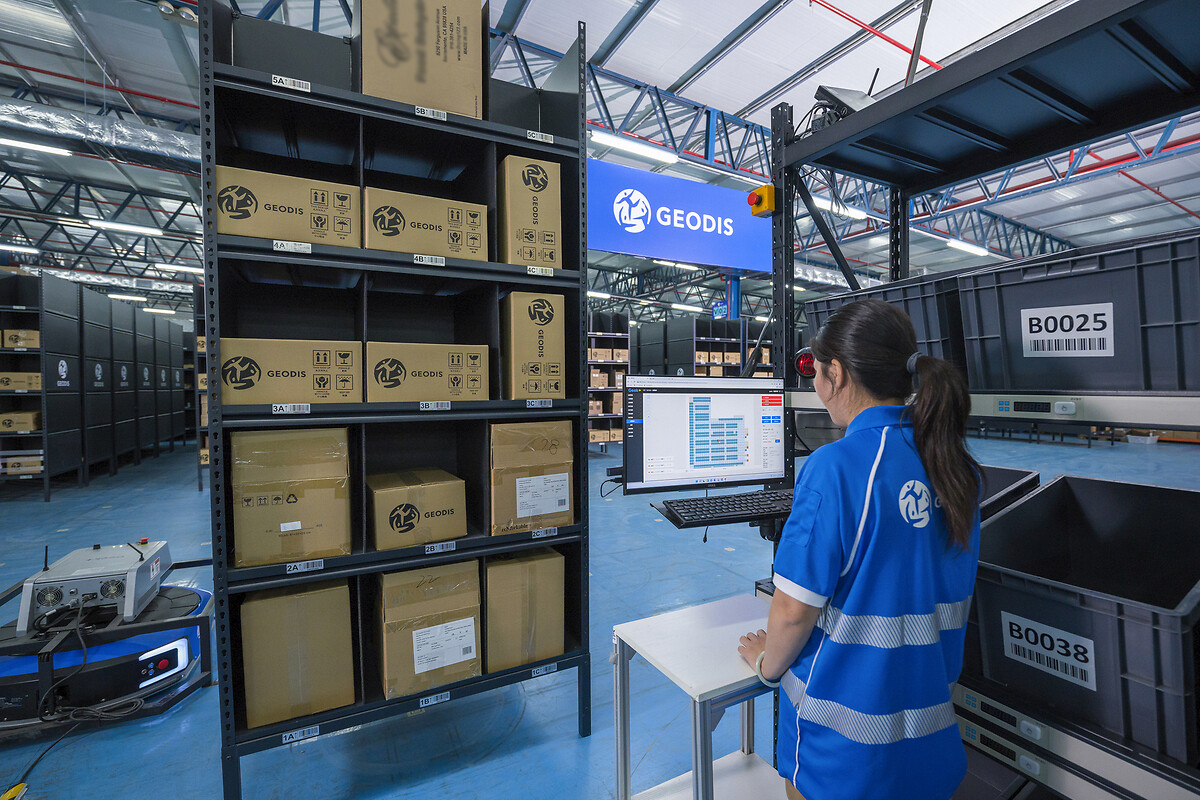
Building and training our workforce forecasting tools
Our data science team worked closely with our Operations and HR departments to develop our predictive tools and approach.
Training the predictive AI model
Our models are based on an open-source Python library. The algorithm we're using creates strong forecasts for planning and goal setting. It is particularly adept at handling "noisy" datasets and incorporating multiple external factors to produce strong baseline forecasts.
The Python library and algorithm provide an excellent balance between traditional forecasting methods that require significant manual tuning versus more involved methods that require a lot of computational power and time. This results in forecasts that can easily be adjusted and refined using facility and client trends. We can quickly generate workforce predictions with minimal manual input.
Some of the advantages of using our predictive models are:
- Better precision than traditional forecasting methods that do not account for external factors.
- Greater ability to fine-tune the model based on client- and facility-specific requirements.
- Close alignment with the trends, seasonality, and cycles often seen in demand data sets.
The models provide us with advanced data-handling functionality. We can easily import historical contract logistics data and combine this with client forecasts, promotions, peak seasons, and other areas that influence demand.
Aligning workforce predictions with client demands and historical data
Our tools take input from multiple areas to provide realistic forecasts. We combine data from historical analysis with client requirements and external factors to create accurate labor predictions. These inputs include:
- Historical inbound (received) and outbound (shipped) volumes.
- Historical workforce and labor levels and trends.
- Seasonality based on peak dates, dip dates, day of the week, and holidays.
- Regular and peak season demands.
- Client requirements and forecasts.
- Product release dates, launches, marketing, and promotion.
- Supply chain disruptions, weather, delays, and unexpected events.
- Other external factors.
The data supporting our forecasting is sourced from our data warehouse, with the main areas coming from records in our Warehouse Management System. This provides us with volume demand, inbound and outbound units, and labor demand.
Training on dates and product volumes
We base our AI predictions on a combination of product volumes and dates:
- Peak dates indicate when there will be a significant increase in volume based on historical data.
- Dip dates tell us when volumes decrease due to external factors.
- Holiday and weekend scheduling if that's required for a particular client or facility.
- Seasonal trends allow us to adjust the model based on daily, weekly, and monthly changes.
- Inbound and outbound volumes drive our predictions for our workforce capacity and skills.
We analyze each facility's labor and volume trends to determine what dates should be peak dates and dip dates. We refine our findings and model using several other date factors such as seasonality, quarter, month, and day of the week.
Refining the AI model for accuracy
We continually refine our forecasting model to increase accuracy and compare predictions to actual results:
- Volume is the key factor for forecast accuracy. It has a high correlation with reliable predictions, especially compared to traditional operations practices and older workforce planning approaches.
- Volume directly influences predicted workforce requirements and is a baseline that we refine using further inputs and analysis.
- We can add in and tweak external factors to ensure any predicted impacts are reflected accurately in forecast results.
- We fit our historical data inputs against our yearly, weekly, and daily trends to adjust for missing data, trend variance, and outliers.
- All predictions are analyzed and compared against our actual workforce capacity and hours spent. We then iterate and improve our forecasting algorithms to improve our prediction accuracy.
- We can tweak our models and forecasts by facility and client account to ensure bespoke predictions based on unique needs and circumstances.
- Our tools automatically create a new forecasting model every week, appending the latest transactions and improving predictions.
For new accounts that lack historical trends, product types, or work category specifications, we will create initial forecasts using default parameters. As we gather more information on a new account, we'll refine labor forecasting based on that data.
Labor forecasting outputs and reports
Our AI workforce prediction approach provides both shorter-term, tactical guidance for our operations teams and longer-term, strategic guidance for overall HR forecasting.
Operational and tactical outputs:
- Predict order volumes on a unit level, by channel for each client and the facility as a whole.
- Predict labor demand on an hourly level, by role for each client and the facility as a whole.
- Aggregate labor forecasts at a daily level.
- Generate overall labor demand forecasts on a daily basis at a facility, client, and work category level.
- Generate a predictive analytics dashboard that provides operations with the correct labor demand data.
- Allow operations to staff by departments, skills, job functions, time frame, and shifts to meet client demands.
- Produce daily forecasts for shipped and received cartons, product lines, and distribution channels.
- Produce daily forecasts for labor requirements, work category types, and hours.
Provide forecasts to clients via the GEODIS Visibility dashboard.
Long-term, strategic outputs:
- Predict aggregated volume and labor forecasts at a client and facility level over a longer timeframe.
- Produce forecasts for weekly shipped and received volumes.
- Produce forecasts for weekly labor requirements.
- Model trends in seasonality, growth, peaks, and additional external factors.
Forecast out to a year to allow for long-term HR management, hiring plans, and prioritization.
Report formats
Our Operations and HR teams can view reports in a variety of formats for day-to-day workforce planning or longer-term workforce hiring and management.
Our tactical forecast displays detailed volume and labor predictions for weekly planning based on historical data, specific trends, seasonality, client demands, and other external factors.
We generate volume forecasts at the inbound and outbound unit levels. Operations can create forecasts for specific clients, business channels, facilities, and work categories. These predictions can be viewed as total hours required or headcount required.
Our forecasts are provided as a line graph that includes several key areas:
- Upper forecast limits.
- Lower forecast limits.
- Base forecast.
Historical headcounts.
The upper and lower forecasts display any uncertainties that our predictive model has, based on trends, seasonality, and additional observation noise.
We also produce strategic forecasts that show long-term volume and labor forecasts at various levels of granularity.
Selected data from our forecasts is available to our clients via the GEODIS Visibility Portal. This portal provides both a graphical representation of our forecasts and tabular data that can be exported in an Excel or PDF format.
Customizing labor forecasting to your needs
Our flexible approach to labor forecasting means that we can predict workforce requirements according to client needs. We can configure and customize our predictions based on multiple dimensions, and present reports that take many factors into account. These include areas like:
- Peak and regular seasons.
- Specific facilities, distribution routes, and lines of business.
- Permanent and temporary employee ratios and shift patterns.
- Value-adding services and areas like repackaging, light assembly, and labeling.
- Product release dates, launches, marketing, and promotion.
Planned and unplanned swings in supply and demand.
Labor forecasting pilot findings
GEODIS piloted our labor forecasting and planning approach with a large, high-tech brand. We implemented our tactical and strategic approach across two separate facilities, and compared labor costs, units shipped, and cost per unit before and after.
Here's what we found:
- Our first facility saw a drop in labor costs from around $6.5 million to $6.1 million, a reduction in labor costs of around 6.5%.
- Our second facility saw a drop in labor costs from around $15.8 million to $13.8 million, a reduction in labor costs of around 12.5%.
- Across both facilities, our total labor costs for our client fell by 11%, with total labor savings of around $2.4 million.
- Our labor cost per unit for facility one fell from $0.56 to $0.52 following our new labor forecasting approach.
Our labor cost per unit for facility two fell from $1.03 to $0.88 following our new labor forecasting approach.
We were also able to increase the volume of units shipped while reducing labor costs and costs per unit:
- Our volume of units shipped for facility one increased from 5.4 million to 6.3 million, a 17% increase.
- Our volume of units shipped for facility two increased from 7.1 million to 8.2 million, a 15% increase.
- Overall, we increased our units shipped by 15% while reducing labor costs by 11%.
We redeployed our saved labor to value-generating activities for our client.
How you can take advantage of labor forecasting
Labor forecasting provides your business with several significant advantages:
- Fast hiring, management, and deployment of labor in line with rapidly changing client needs.
- Objective, data-driven forecasts that take all factors into account.
- Rapid ramp-up and ramp-down of the workforce for peak seasons and other times of high demand.
- A mix of skills, roles, and shift patterns to ensure we always meet client SLAs.
- Robust risk management to reduce the impact of unexpected circumstances.
- Significantly reduced labor costs while maintaining and improving product throughput.
Optimization across all logistics processes, distribution channels, and routes to market.
For existing GEODIS clients
If you're currently a contract logistics GEODIS client, it's easy to add all these benefits to your logistics services. Simply get in touch with your account manager. They'll forward your details to our data science team who will set up AI labor forecasting for your logistics operations.
For new GEODIS clients
If you're transitioning over to GEODIS, we can enable AI labor forecasting as part of your migration. Our transition team will connect you with our data science team who will set up your labor forecasting model. We'll use data from your previous provider to configure labor forecasting, or create a new profile that we can quickly update as we analyze your real-world logistics usage.
AI labor forecasting and what it means for the logistics industry
We believe that AI-driven labor forecasting will transform the way that 3PL providers manage their workforces and meet client needs. Although existing labor planning approaches are well-established throughout the industry, our research and results demonstrate that AI-driven tools will significantly and consistently drive lower costs while increasing throughput and continuing to meet SLAs.
GEODIS is delighted to be investing in this field as part of our "Technology as a Strength" initiative. We are happy to share our approach, methodology, and results through interviews, seminars, articles, and other media. For further information, please contact GEODIS Americas.
Conclusion
We're delighted with the benefits and advantages offered by our new labor-planning and forecasting approach. As client requirements change, we can quickly flex our workforce to meet SLAs while significantly reducing your costs. Our pilot project lowered labor costs by more than 10% while increasing throughput.
As your needs grow, we'll meet your increasing demand. You can trust GEODIS to stay agile, optimize our workforce, and deliver benefits to you. Take advantage of the latest in data analytics, AI and forecasting algorithms, HR best practices, demand planning, and workforce management.
We're now deploying our new labor planning approach across our contract logistics client accounts to provide consistent logistics services across all of our operations. Even better, we're able to redeploy our labor savings to value-adding activities for our clients at no additional cost to you.
Get in touch with us today to add labor forecasting to your account or find out about the benefits of moving your logistics services to GEODIS.