06/29/2026

The USMCA Clock is Ticking: What the July 1 Review Means for Your Supply Chain

With the USMCA's first joint review underway, here's what operations leaders need to know — and do — to protect their cross-border supply chains.

Most operations leaders did not build their North American supply chain thinking much about trade agreement review cycles. That is understandable. The USMCA has been a stable, predictable framework since it replaced NAFTA in 2020 — governing more than a trillion dollars in annual cross-border commerce between the United States, Mexico, and Canada. Stability, by definition, does not demand attention.


July 1, 2026 changes that.


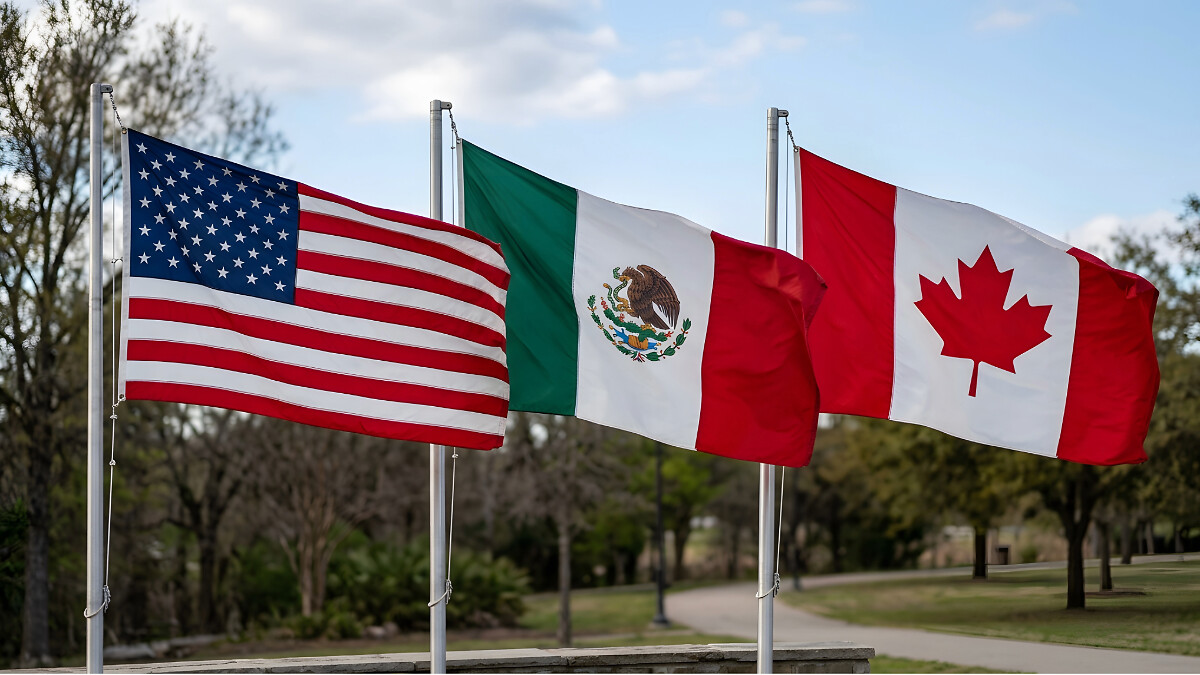
On that date, the first mandatory six-year joint review of the USMCA formally begins. This review determines whether the agreement continues intact beyond 2036, whether any of the three governments seeks to modify its terms, or whether any party signals intent to withdraw and reopen negotiations. For brands that have built sourcing, nearshoring, or distribution strategies around USMCA-enabled trade flows, the process that starts July 1 is not a policy story to hand off to the legal team. It is a supply chain risk event that demands operational attention.

What the Joint Review Actually Is — and What It Is Not

The USMCA’s review mechanism is built into the agreement itself. Every six years, the three governments must formally assess whether to extend it, propose targeted amendments, or trigger a withdrawal process that would force renegotiation. A signal of intent to withdraw does not end the agreement immediately — it opens a negotiating window that can run for years — but it introduces the kind of prolonged uncertainty that makes supply chain planning genuinely difficult.


The July 1 review is the first of this kind since the agreement took effect. That alone makes it a higher-stakes moment than anything the USMCA has seen: no established precedent, no template for how the three governments will manage the process, and substantial political pressure on all sides to use the review to score points with domestic constituencies.


Importantly, the review does not start from scratch. In the lead-up to July 1, the Office of the U.S. Trade Representative launched a formal sector-specific review of automotive goods, inviting input from producers, labor organizations, and other stakeholders on rules of origin compliance, regional value content requirements, and the effectiveness of the agreement’s automotive provisions given changes in manufacturing technology. That process is a signal of the scrutiny level the broader review will bring across other sectors — and a preview of the kind of evidence-based advocacy that will shape its outcomes.

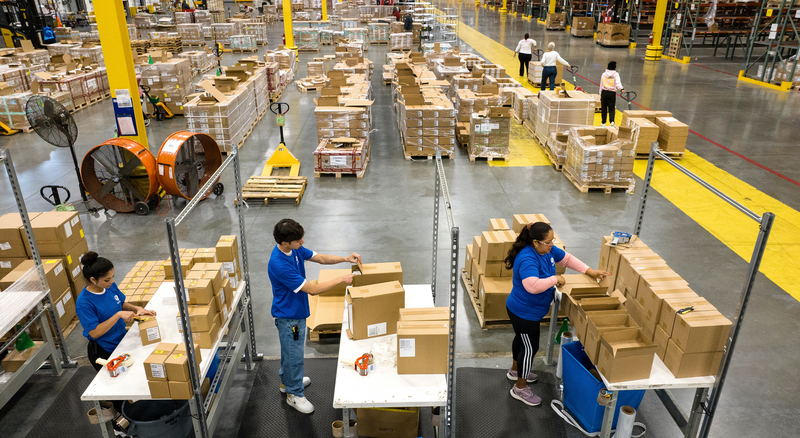
PICT084375-Teammates are labeling orders by each individual unit. Newly labelled items will then be sent out in orders to Retail stores-SCHNEIDER Patrick.png

What Is Under the Microscope

The automotive review provides a useful map of the terrain. The USTR’s process examined regional value content requirements, North American steel and aluminum purchase mandates, labor value content thresholds, and the certification procedures that determine whether goods qualify for preferential duty treatment. Each of these is a foundational mechanic of how rules of origin work under the USMCA. Changes in the automotive context could set precedent for how that logic gets applied — or tightened — in adjacent manufacturing and consumer goods categories.


Beyond automotive, the areas with the most relevance to retail and consumer brands include labor enforcement provisions and the agreement’s rapid-response dispute panels, agricultural market access terms, digital trade and data localization rules, and the broader duty treatment structures that underpin nearshoring economics in Mexico. Brands should also keep a close eye on the tariff landscape running parallel to the review. Ongoing Section 301 and Section 232 actions represent a separate but interacting track of trade policy risk — one that does not pause while the USMCA review plays out.

The Operational Stakes for Retail and Consumer Brands

The nearshoring wave that reshaped North American supply chains was not built on gut instinct. It was built on the economics that USMCA makes possible: preferential duty treatment for qualifying goods, supply chain predictability across the U.S.-Mexico border, and transit speeds that Asia-based sourcing simply cannot match. For brands that made that shift, the USMCA is not background infrastructure — it is a core input to their cost model.


Consider what a meaningful rules-of-origin change could mean in practice. If regional value content thresholds tighten in a given product category, goods that currently qualify for preferential duty treatment may not meet the new bar — exposing them to standard most-favored-nation tariff rates. Depending on the category and current duty differential, that is not a rounding error. It is a landed cost shock that can undermine the entire business case for a nearshored supply chain.


Labor value content changes carry their own complexity. Adjustments to LVC requirements could force supplier requalification across an entire vendor base — a time-consuming, expensive process that has nothing to do with how well the underlying sourcing relationship is functioning.


And then there is the cost of uncertainty itself, which operations leaders tend to underestimate until they are living inside it. When trade terms cannot be forecast with confidence, brands compensate: more inventory as a buffer, slower procurement commitments, redundant network capacity as a hedge. None of those responses are free, and all of them are defensive moves that subtract from efficiency without adding to resilience. The review period is a planning risk even if its ultimate outcome is continuation.

customs-corner-cargo-stock-image-2-1.png

Four Things Prepared Operations Leaders Are Doing

The brands best positioned going into — and through — the review period are treating it as a supply chain planning event, not a news story. Here is what that looks like operationally.


  • Run a USMCA exposure audit at the SKU level. Identify exactly which products, trade lanes, and supplier relationships are relying on preferential duty treatment, and model what tariff exposure would look like under alternative scenarios. Many brands have mapped this at a category level but not below it. The review period is the right moment to close that gap.
  • Build scenario models before they are needed. Even a rough analysis of a status-quo outcome versus a partial amendment affecting rules-of-origin thresholds in key categories helps operations and finance teams prioritize where contingency investment makes sense. The goal is not to predict the outcome — it is to understand the cost delta between plausible scenarios so decisions can be made faster when clarity arrives.
  • Tighten customs documentation and compliance infrastructure. During periods of trade policy review, customs enforcement scrutiny tends to rise. Agencies use enforcement activity to signal seriousness on the underlying policy questions. Clean, defensible records of origin certification and tariff classification matter more, not less, when the agreement governing those classifications is itself under review.
  • Engage the policy process. Industry associations, chambers of commerce, and trade advocacy groups are actively shaping the record during the review period. Brands with significant cross-border exposure have a legitimate voice in this process and a real interest in what gets decided. Making that voice heard — through direct comment submissions or coalition advocacy — is not a distraction from operations. It is operations strategy applied upstream.

Why Your Logistics Partner Matters More During a Review Period

Supply chain strategy and trade policy are not separate disciplines. For an operations leader managing cross-border flows, they are the same problem viewed from different angles. The ability to scenario-plan, reroute, reclassify, or restructure distribution when trade terms shift depends on having a logistics partner with genuine cross-border depth — not just the capacity to move freight, but the customs expertise, regulatory relationships, and operational infrastructure to execute quickly when the environment changes.


GEODIS operates with more than 3,300 logistics professionals across freight forwarding and contract logistics in Mexico alone, within a global network spanning nearly 170 countries. That scale brings real on-the-ground capability to the trade lanes most directly affected by the USMCA review — the customs navigation expertise and compliance knowledge that keeps brands moving efficiently as policy evolves, not scrambling after it does.


GEODIS has been actively tracking the USMCA review process, translating regulatory developments — including the USTR’s automotive goods review — into practical guidance for clients through resources like the GEODIS Customs Corner. That kind of ongoing trade intelligence is not a nice-to-have. It is the difference between a supply chain that adapts ahead of a policy shift and one that reacts to it.


The contract logistics model GEODIS brings to this moment also matters. Brands do not need to rebuild their supply chain to adapt to a shifting trade environment. A plug-in infrastructure approach — one that allows companies to flex distribution nodes, absorb demand changes, and adjust cross-border flows without restructuring from scratch — is exactly the kind of operational agility the USMCA review period calls for.

The Clock Is Running

The USMCA joint review is a structured process with a defined timeline, and it will produce outcomes — whether continuation, amendment, or something more disruptive — that will shape North American trade for the next decade. Operations leaders who treat it as background noise are making a choice, even if it does not feel like one.


Understanding your exposure, building scenario models, engaging the policy process, and making sure the right logistics partner is in place are not heroic undertakings. They are the kind of proactive planning that separates supply chains that absorb disruption from those that are defined by it. The review has started. The work starts now.

FAQ title here

The USMCA includes a mandatory six-year review mechanism under which the U.S., Mexico, and Canada formally assess whether to extend the agreement, propose amendments, or signal intent to withdraw. July 1, 2026 marks the start of the first such review. It does not automatically trigger renegotiation, but it opens a structured process that could lead to meaningful changes in the agreement’s terms — and creates significant advocacy pressure from all sides.

A party that signals intent to withdraw during the review process triggers a renegotiation window. Whether that happens depends on the political posture each government brings to the process. The more likely near-term scenario is targeted advocacy for amendments to specific provisions — rules of origin, labor enforcement mechanisms, or sector-specific terms — rather than full withdrawal. That said, supply chain leaders should model for a range of outcomes rather than defaulting to an assumption of continuation.

USMCA provides preferential duty treatment for goods that meet its rules-of-origin requirements. If those requirements tighten in your product categories, goods that currently qualify may no longer do so, exposing them to standard most-favored-nation tariff rates. Depending on the category and current duty differential, that shift can have significant landed cost implications and may force supplier or sourcing decisions that were not part of the original nearshoring calculus.

Rules of origin define how much of a product’s value must be produced within the USMCA region — through regional value content thresholds, material sourcing requirements, or manufacturing process standards — in order to qualify for preferential duty treatment. If those thresholds change, brands may need to adjust supplier relationships, shift input sourcing, or restructure manufacturing arrangements to maintain qualification. This is one of the most operationally consequential areas the review could affect, and the one most worth modeling in advance.

Start with a USMCA exposure audit: map which products and trade lanes rely on preferential treatment and understand the duty exposure under alternative scenarios. Then build scenario models around plausible review outcomes, tighten customs documentation and compliance records, and engage the policy process through industry associations where your category has exposure. Working with a logistics partner that carries deep cross-border expertise in Mexico — and actively tracks USMCA developments — is also a meaningful operational advantage during this period.

Arial Struthers

Associate Manager, Corporate Communications