04/29/2026

What Happens After the Ship Docks: A Retailer's Guide to Final Mile Logistics at U.S. Gateways

The domestic stretch from port to store shelf is where retail supply chains succeed or fail. Here's what Final Mile logistics involves and what to look for in a provider.

Your merchandise has crossed an ocean, cleared customs, and arrived at a U.S. port. By almost any measure, the hard part is over.

Except it isn't.


For retailers importing apparel, footwear, home goods, and seasonal merchandise, the journey from port to store shelf is often the most complex and costly part of the entire supply chain — and the most overlooked. This is where delivery windows get missed, retailer fines accumulate, and inventory arrives too late to matter. Understanding what happens in this stretch, and what to look for in a logistics partner who can manage it well, can save retailers significant time and money.

Why the Domestic Leg Gets Underestimated

Most supply chain attention goes to the ocean voyage: freight rates, carrier reliability, customs clearance. These matter. But once a container clears the port, an entirely different set of operational challenges begins.


Think about what a retailer is coordinating at a major U.S. port at any given moment. That container needs to be retrieved from the port terminal quickly — carriers charge daily fees, sometimes hundreds of dollars per container, for every day it sits waiting. The contents then need to be unloaded, sorted, labeled, and prepared to ship onward, ideally within 24 hours. From there, goods need to reach the right distribution centers or stores, often within specific delivery windows. Miss a two-hour window at a major retailer's distribution center and the financial penalty arrives automatically.


All of this needs to happen consistently, across port markets that each operate differently, and at even higher volume during the holiday season, back-to-school, and other peak periods. A logistics provider who is strong at ocean freight but inexperienced with U.S. port operations will struggle here — and that struggle shows up directly on a retailer's bottom line.


This segment of the supply chain is called Final Mile logistics, and it deserves the same strategic attention that retailers give to sourcing and ocean freight.

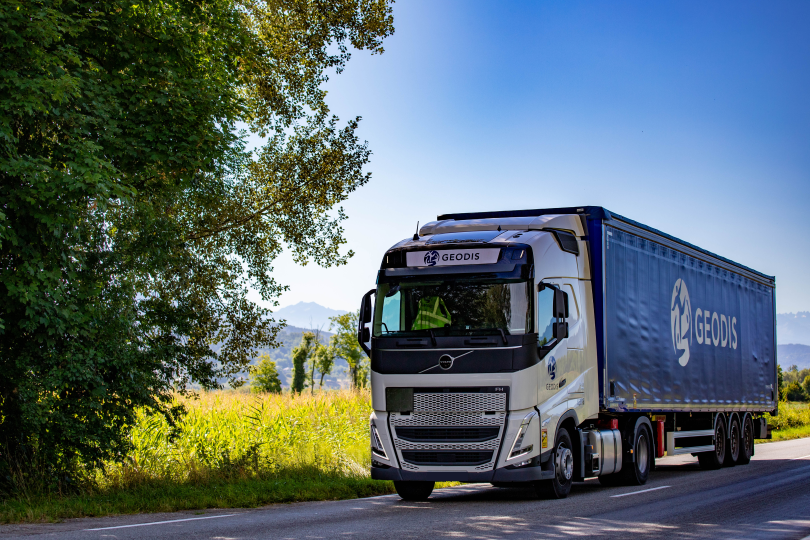
geodis-heavy-truck-on-a-road.png

Not sure which option is right for your business? Contact our Transportation Management experts for guidance on the best solution for your specific needs. Get in touch with GEODIS.

What Final Mile Logistics Actually Involves

Final Mile logistics is not a single service. It is a collection of connected services that together move goods from a port to their final destination. Each plays a distinct role, and the right combination depends on a retailer's network, volume, and store footprint.


Getting the Container Off the Port: Drayage

Drayage is the truck move that takes a container from the port terminal to a nearby warehouse or distribution facility. It sounds straightforward, but port environments are complex — terminals have their own appointment systems, gate hours, and equipment availability, and these vary significantly from port to port and season to season.


The financial risk of poor drayage execution is immediate. Demurrage fees — the charges carriers levy when containers are not retrieved quickly enough — can run hundreds of dollars per container per day. Over a peak season, across dozens or hundreds of containers, this adds up fast. A logistics provider with established port relationships, 24/7 availability, and real-time container tracking can prevent most of these costs before they occur.


Breaking Down International Shipments: Deconsolidation and Transload

A standard ocean container arrives packed for international shipping — often a mix of products destined for different distribution centers or regions. Before those goods can move efficiently through the U.S. supply chain, they need to be broken down and reorganized for domestic distribution. Two services handle this:


Deconsolidation takes a large international shipment and splits it into smaller domestic shipments, each routed to the appropriate destination. A retailer with distribution centers in New Jersey, Atlanta, and Los Angeles, for example, receives one container at the port but needs its contents divided and directed to all three locations.


Transload takes goods from an international ocean container and reloads them into domestic trailers better suited for overland transport. This often involves re-palletizing and relabeling products to meet domestic distribution requirements. It also has an environmental benefit: by shifting goods into more efficient domestic transport modes, transload reduces the carbon footprint of the distribution leg.


Both services require specialized facilities close to port terminals — large yards, multiple loading docks, and teams capable of processing high volumes quickly, often around the clock.


Skipping the Distribution Center Entirely: DC Bypass

In a traditional retail supply chain, imported goods flow from the port to a distribution center, and then from the distribution center out to individual stores. DC bypass eliminates the middle step. Goods move directly from the port-area facility to individual stores or regional delivery points.


For retailers with stores near major port cities, or for fast-moving products where every day of delay has a revenue cost, DC bypass can meaningfully accelerate how quickly merchandise reaches the sales floor. It also reduces handling, lowers transportation costs, and decreases the number of times goods are touched — each of which is an opportunity for damage or error.


Not every retailer or every product is a candidate for DC bypass. It works best when store density near import ports is high and when speed to shelf is a priority. But for retailers who qualify, it is one of the most effective ways to improve Final Mile efficiency.


Organizing Shipments from Multiple Suppliers: Vendor Consolidation

Large retailers typically source from many vendors. Without coordination, each vendor ships separately — via small truckloads, partial truckloads, or parcel — and deliveries arrive at distribution centers on different schedules, in different volumes, with different documentation. Managing inbound freight from dozens of vendors is expensive, labor-intensive, and prone to error.


Vendor consolidation brings order to that process. A logistics provider establishes a facility in a region where multiple vendors are located. Those vendors route their shipments to that facility, where they are combined into full truckloads before moving to the retailer's distribution center. The result is fewer, fuller trucks; lower transportation costs; more predictable delivery schedules; and better inventory accuracy because freight moves through a single, managed process rather than many independent ones.


Delivering Efficiently Across a Region: Pool Distribution

Pool distribution is a practical solution for retailers with many stores spread across a metropolitan area or region. Instead of sending a separate truck to each store, multiple store deliveries headed to the same geographic area are consolidated onto a single truck. The truck travels to a central regional point, where the shipments are sorted and dispatched to individual stores on smaller local vehicles.


The efficiency gains are real: fewer trucks on the road, lower delivery costs per store, and more consistent delivery schedules. For retailers in dense urban markets like New York, Los Angeles, or Chicago, pool distribution is often the difference between a Final Mile program that is financially viable and one that is not. The critical factor is whether a logistics provider actually has a dense enough network in the relevant markets to run pool routes reliably.


The Final Handoff: Store Delivery

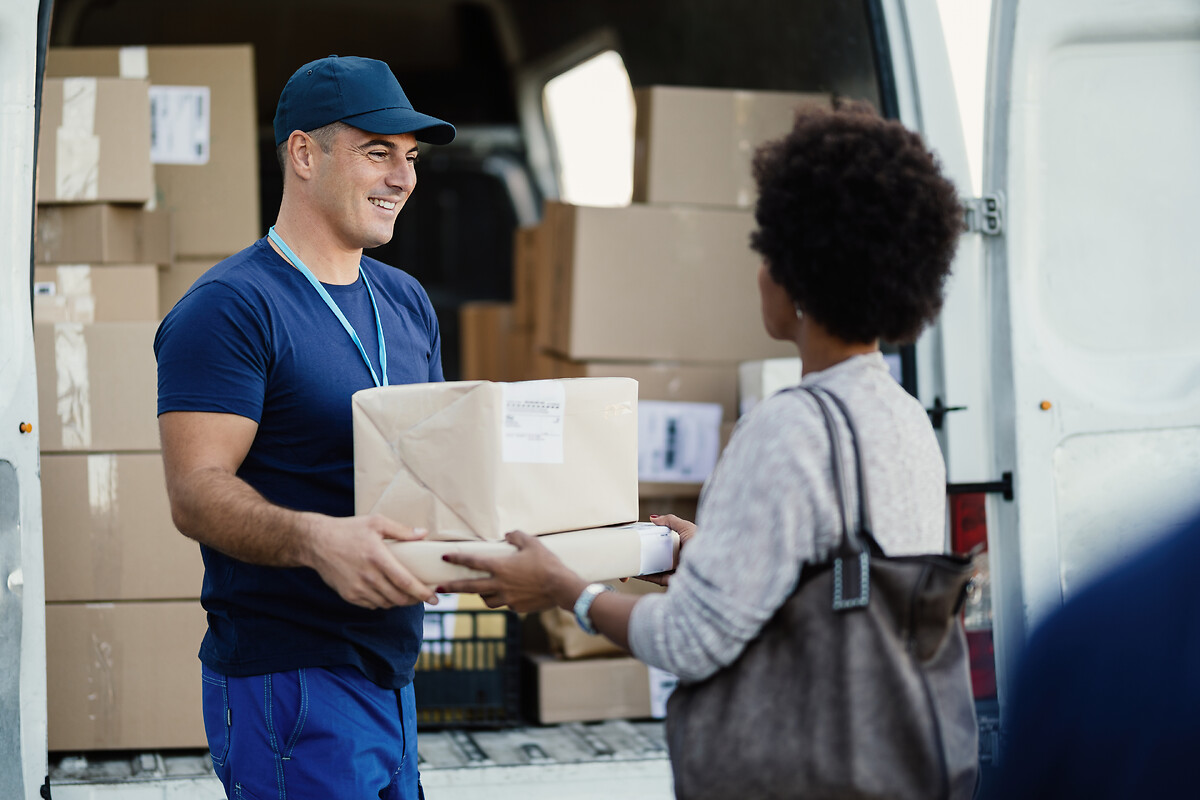
All of the services above exist to make this moment possible: merchandise arriving at the right retail location, at the right time, in the right condition. Store delivery — whether to a mall anchor, a free-standing location, or a specialty retailer — is where Final Mile performance becomes visible to the retailer's own operations team.


Delivery windows at major retailers are narrow, typically two hours, and non-compliance triggers automatic fines. Carton- and pallet-level scanning at the point of delivery provides the inventory confirmation that retailers need for accurate receiving. Consistent on-time performance at or above 98.5% is the standard that separates high-performing Final Mile providers from the rest.
Why the Provider's Physical Presence Matters

A logistics provider can claim national coverage in its marketing materials and still be thinly resourced in the specific markets that matter to your business. There is a meaningful difference between a provider that has physical facilities, established port relationships, and operational experience in your key gateway cities, and one that serves those markets through brokered capacity or limited infrastructure.


For retailers importing through multiple U.S. gateways — say, both the East and West Coasts — this matters even more. A provider with genuine operations on both coasts can maintain consistent service standards across all of them, share visibility across markets, and dynamically redirect freight when one port faces a disruption. A provider strong in one region and thin in another will create gaps that emerge at the worst times, typically during high-volume periods when there is no room for error.


When evaluating any Final Mile partner, ask specifically: Where are your facilities relative to the ports I use? What are your standard turn times at those locations? Do you have 24/7 receiving capability? Can you show me your on-time delivery performance data for store delivery in my markets? Specifics matter more than general claims.

Not sure which option is right for your business? Contact our Transportation Management experts for guidance on the best solution for your specific needs. Get in touch with GEODIS.

we-are-glad-that-you-have-trusted-us-to-deliver-yo-2024-12-13-18-19-00-utc.jpg

What Good Visibility Looks Like

One of the most common frustrations retailers have with logistics providers is not knowing where their freight is or when it will arrive. This is not just an inconvenience — it has real operational consequences. Distribution centers that do not know when inbound freight is arriving cannot plan labor efficiently. Buyers who cannot track inventory in transit cannot make good replenishment decisions. Finance teams without delivery confirmation struggle to reconcile invoices and process claims.


A capable Final Mile provider should offer real-time tracking from the moment a container leaves the port through to store delivery, with updates at the purchase order and individual carton level. For high-value merchandise, GPS tracking and photo documentation at the point of delivery protect against loss and simplify the claims process when issues do arise. These are not premium features — they are the baseline of what any serious provider should offer.

Why Peak Season Reveals the Truth About a Provider

Every retail logistics operation looks functional during calm periods. The real test is what happens during peak season — holiday, back-to-school, major promotional windows — when container volumes double, delivery schedules compress, and the cost of a missed window is highest.


A logistics provider without genuine capacity to scale during peak periods will fail retailers during the moments that matter most. Scaling is not just having more trucks available — it means having the warehouse space to absorb surge volume, the labor to process it quickly, and the operational flexibility to open additional facilities if needed. Some providers accomplish this through their own assets; others through a well-managed network of partners. What matters is whether it actually works under pressure.


When evaluating a provider, ask specifically how they have handled major volume surges in the past. Ask for references from retail clients who have experienced peak season with them. And ask what happens when primary capacity is exhausted — the answer to that question is often the most revealing.

The Case for Treating Final Mile as a Long-Term Partnership

Final Mile logistics is an area where short-term cost optimization often produces long-term underperformance. Providers who win business on price frequently cut corners on the operational investments — dedicated account management, technology integration, continuous process improvement — that produce reliable results over time.


The retailers who get the most out of their Final Mile programs tend to have long-standing relationships with a provider who knows their business deeply. That means a dedicated account manager who understands the retailer's store network, vendor base, and seasonal patterns. It means joint problem-solving when issues arise rather than reactive finger-pointing. And it means a provider who proactively identifies opportunities to improve the program over time rather than simply executing the same playbook year after year.


The performance benchmarks that indicate a mature, well-functioning Final Mile partnership — claims rates below 0.05% of revenue, carton misrouting rates below 0.001%, on-time delivery consistently above 98.5% — do not happen immediately. They are the result of sustained operational investment and a relationship built on mutual accountability. When evaluating providers, the most useful question is not "what do you promise?" but "what have you actually delivered for retailers similar to us, over how many years?"

Questions Worth Asking Before You Sign a Contract

Choosing a Final Mile logistics partner is a significant operational decision. These questions will help surface the difference between providers who can genuinely deliver and those who are better at selling than executing.


On port operations: Do you have your own facilities near the specific ports I import through? What are your standard container turn times, and can you show me documented performance data? Do you operate 24 hours a day, seven days a week at those locations?


On scalability: How have you managed significant volume surges in the past — can you walk me through a specific example? What do you do when your primary capacity is fully committed and additional volume arrives unexpectedly?


On visibility: What does real-time tracking look like in practice for my team? Can you provide purchase-order-level and carton-level tracking, and how is that data delivered to us?


On operational fit: Have you run DC bypass programs or vendor consolidation for retailers similar to us? Do you have pool distribution routes in the specific metro markets where my stores are located?


On partnership: Who would be my dedicated account manager, and how long have they worked in retail logistics? What does your continuous improvement process look like, and how do you share performance data with clients on an ongoing basis?


The Bottom Line

Retailers spend considerable energy optimizing the international side of their supply chains. The domestic Final Mile — the services that move goods from U.S. port terminals to store shelves — often receives far less attention, even though it is where many of the most controllable costs and service failures actually occur.


Understanding what Final Mile logistics involves, what separates strong providers from weak ones, and what questions to ask before committing to a partner gives retailers a meaningful advantage. The best Final Mile programs do not just move freight — they protect margins, support inventory planning, and contribute to the on-shelf availability that drives retail performance.

Not sure which option is right for your business? Contact our Transportation Management experts for guidance on the best solution for your specific needs. Get in touch with GEODIS.

Frequently Asked Questions

Final Mile logistics at U.S. gateways refers to the services that move imported goods from port arrival to their final destination — a retailer's distribution center, a regional delivery point, or an individual store. It includes drayage (retrieving containers from the port), deconsolidation and transload (reorganizing freight for domestic distribution), DC bypass (shipping directly to stores), vendor consolidation (combining multi-vendor shipments), pool distribution (regional delivery consolidation), and store delivery.

The most important U.S. import gateways for retail are NY/NJ, LA/Long Beach, Miami, Savannah, Jacksonville, and Houston. Each operates differently in terms of terminal systems, congestion patterns, and regional infrastructure. A logistics provider's familiarity and operational presence at the specific ports you use matters considerably.

DC bypass routes goods directly from a port-area facility to individual stores, bypassing the distribution center entirely. It reduces handling, cuts transportation costs, and gets merchandise to stores faster. It works best for retailers with stores concentrated near major port cities and for products where speed to shelf is a priority. Not every retailer or every product category is a good fit, and implementing it well requires operational planning.

At minimum, expect real-time tracking from port arrival through store delivery, with updates at the purchase order and carton level. For high-value freight, GPS tracking and delivery photo documentation should be standard. This data should be accessible to your team through a reporting dashboard, not delivered manually or on request.

Ask for specific examples of how they have managed significant volume increases — not projections, but documented past performance. Understand what their flex capacity model looks like: do they have access to overflow warehouse space, additional labor resources, and a driver network that can absorb surge volume? Ask for references from retail clients who have been with them through at least one major peak season.

Long-term partnerships produce compounding operational improvements that take time to develop — refined processes, integrated systems, and a provider team that understands your business well enough to solve problems before they escalate. Performance metrics like consistent on-time delivery above 98.5% and claims rates below 0.05% of revenue are typically the product of years of operational refinement, not something a new provider can promise from day one.

Arial Struthers

Associate Manager, Corporate Communications