
Index Gender equality

01/13/2026

Why ISO Certification Matters for Your Logistics

ISO certification means that your logistics provider prioritizes quality. Learn how supply chain certification works, why industries like healthcare and food require it, and what certified quality management means for your logistics operations.

When logistics companies move products around the world, their clients expect the highest standards of quality and safety. But how do you prove you can keep those standards? Especially if you’re working across dozens of facilities that involve hundreds of processes and thousands of people.


That's where certification comes in. ISO certification provides a framework that companies use to improve the quality of what they do. For industries like healthcare, food, technology, and manufacturing, product integrity is critical. ISO certifications are often table stakes. Logistics providers must have the right certifications before companies would ever consider using them. 


What does that mean in practice? Here's how ISO certification actually works for supply chain operations, why it matters, and what that means for you. 

Key takeaways


  • ISO certification is an internationally recognized quality framework. It's a detailed blueprint that logistics providers use to document processes, train people, measure performance, and drive continuous improvement.
     
  • Certification means proof, not marketing claims. Third-party auditors independently check that logistics providers actually follow their quality processes. That external validation gives you assurance that promises alone can't match.
     
  • For many industries, certification isn't optional. Healthcare, food, automotive, and aerospace companies often require ISO certifications like ISO 13485 or ISO 9001 before they'll even consider a logistics provider.
     
  • Certified logistics providers help you meet your obligations. Regulations and safety requirements don't stop when you hand goods to a logistics provider. Using certified providers means they use the same quality frameworks that you do. 
     
  • Multiple certifications build on a common foundation. ISO 9001 establishes the core quality framework. Once that's in place, adding specialized certifications for environmental protection, workplace safety, or information security becomes much more manageable.

What ISO certification actually means

ISO stands for the “International Organization for Standardization.” This organization creates internationally recognized standards for quality, safety, and efficiency. Think of ISO standards as detailed blueprints for how the best companies should be working. 


“Standards define what great looks like, setting consistent benchmarks for businesses and consumers alike — ensuring reliability, building trust, and simplifying choices.”
 

International Organization for Standardization.


Each ISO standard uses a specific number to show what it covers.


ISO 9001 is the foundation for all of the other standards. It creates the core framework for everything else: How you document processes, train employees, handle problems, measure performance, and drive improvement. Drew Cravens, Head of Regional Quality Management for GEODIS Americas says, "9001 is the root system and the central core. It establishes the full general framework for how to manage quality."


Other ISO certifications build on this foundation, adding specific requirements for particular areas. For example, a logistics provider might also have ISO certifications for environmental management (ISO 14001), health and safety (ISO 45001), medical devices (ISO 13485), or information security (ISO 27001). All of these standards follow the same basic structure but add specialized instructions and systems for managing quality.


The key word here is "system." ISO certification isn't about checking boxes or hanging certificates on walls. It's about an integrated culture of quality management that touches every part of operations. This system defines policies, documents procedures, establishes accountability, and creates mechanisms for identifying and fixing problems before they affect customers.

why_iso_certification_matters_supply_chain.jpg

GEODIS has been ISO-certified for more than 25 years. Get in touch with us.

How quality certification works in practice

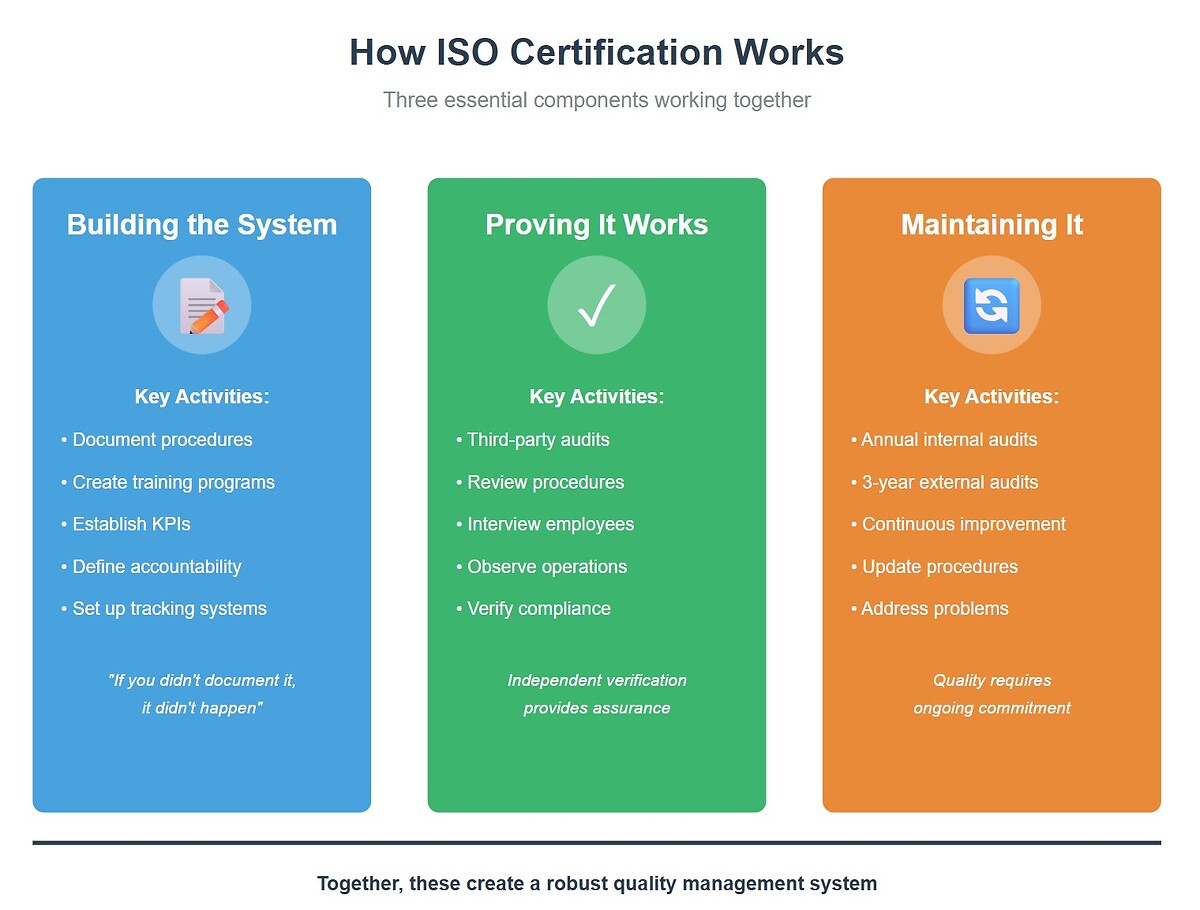
Getting certified requires three major components: building the system, proving it works, and maintaining it consistently.


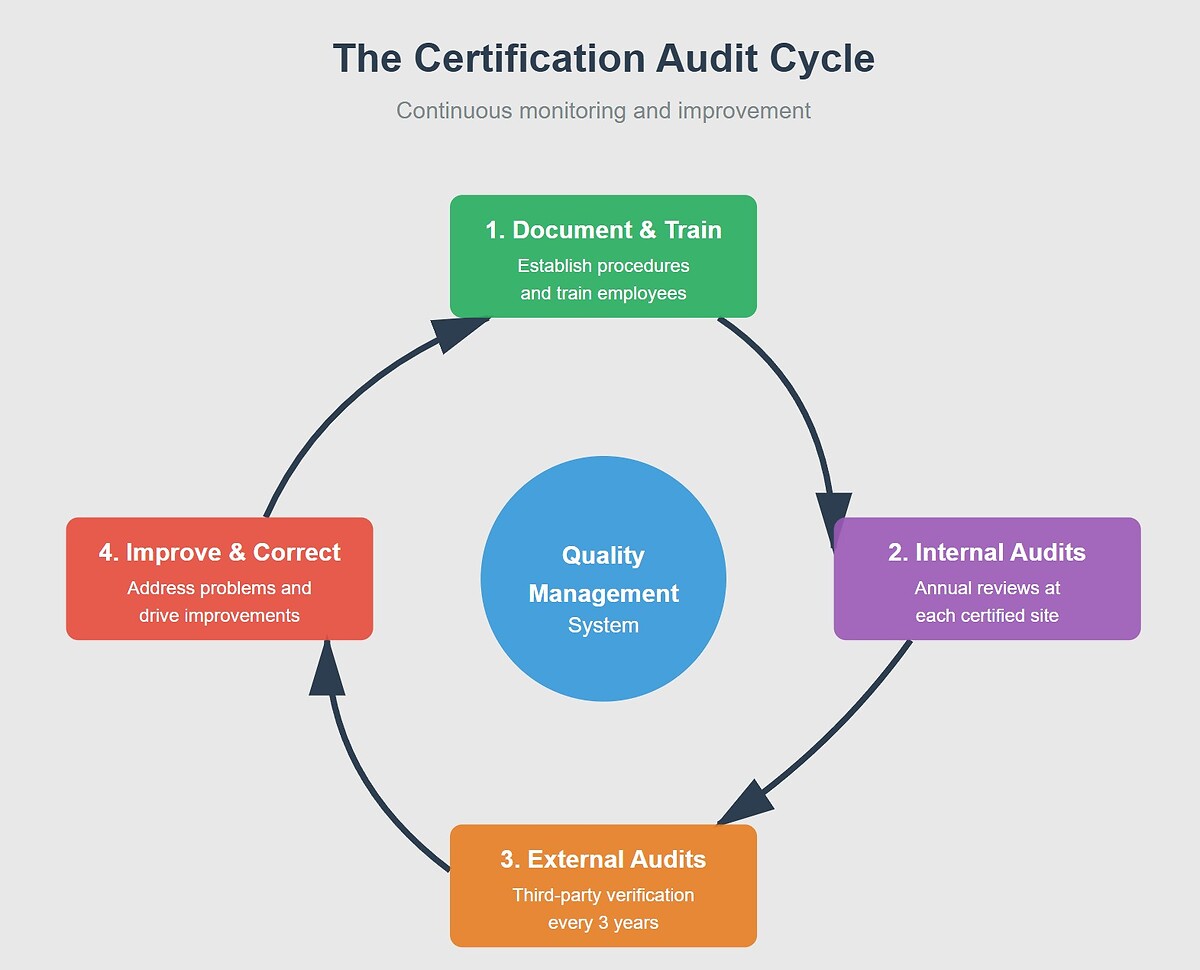
Building the system means documenting everything. Standard operating procedures for every significant process. Training programs ensuring everyone knows their role. Methods for tracking performance. Processes for handling problems when they occur. As Cravens notes, "One of the principles of good quality management is that if you didn't document it, it didn’t happen!"


But, you’re not just documenting something “just because.” Documentation has a practical purpose. When an employee needs to handle a temperature-controlled pharmaceutical shipment, they follow documented procedures that tell them exactly how to meet the right conditions, what to do if temperatures drift, who to notify, and how to document every step. No guessing, no improvising, no relying on memory.


Proving the system works happens through audits. Third-party, independent auditors come in and verify that documented procedures actually get followed. They review records, interview employees, observe operations, and check that the system functions as designed.


These aren't gentle reviews. Auditors look for gaps between what procedures say and what actually happens. They verify that training occurred and was effective. They trace problems through corrective action systems to ensure issues get addressed, not just documented and forgotten. They also look for evidence of the Quality Culture, executive and front-line leadership engagement and support.


Maintaining certification demands ongoing effort. Internal audits happen regularly, typically annually for each certified site. Even more often for high-complexity, high-risk operations like food or healthcare. The third-party auditors return every three years to verify continued compliance. The quality management team reviews how things are going, governs updates to procedures as operations change, and partners with operations and other stakeholders when any problems are identified.

how_iso_certification_works.jpg

GEODIS Americas: 25+ years of ISO excellence

GEODIS is a logistics provider that puts quality management at the center of what we do. As of December 2025, the company completed its 28th consecutive annual ISO certification cycle, a milestone representing nearly three decades of consistent quality system implementation and improvement.


The Americas Integrated Management System (AIMS) covers multiple ISO certifications across contract logistics, freight forwarding, and now healthcare transportation. This integrated approach means that whether goods move through warehouses, cross borders, or require specialized healthcare handling, the same quality principles and practices apply.


The 2025 certification cycle brought a significant addition, as Healthcare Transportation joined our ISO certifications for the first time. This expansion reflects the GEODIS commitment to end-to-end quality. 


Currently, GEODIS Americas maintains ISO certifications for:


  • Quality management (ISO 9001)
  • Environmental protection (ISO 14001)
  • Occupational health and safety (ISO 45001)
  • Medical device quality (ISO 13485)
  • Information security (ISO 27001)


We’re continuing to expand our ISO certifications. Select sites will be adding ISO certifications in supply chain security (ISO 28001) and compliance management (ISO 37301), further expanding the scope and effectiveness of our quality program.


This achievement reflects the dedicated work of front-line teams, support functions, and leadership across operations, human resources, transportation, sustainability, safety, and quality. Maintaining this level of consistency for 28 years demonstrates that quality management isn't just a program, it's embedded in everything GEODIS does.

Are you looking for an ISO-certified logistics provider? Get in touch with GEODIS.

The ISO certification family

Strong quality management comes from understanding how the various ISO certifications work together. 


ISO 9001 serves as the foundation. Every other management system standard builds on these core principles: document your processes, train your people, measure performance, fix problems, improve continuously. ISO 9001 puts solid quality management basics in place.


ISO 14001 adds environmental management. This certification addresses how companies handle environmental impacts like waste management, energy use, emissions, and resource consumption. 


ISO 45001 focuses on workplace health and safety. This standard helps organizations prevent work-related injuries and create safe working conditions. In logistics, this covers everything from warehouse safety procedures to health programs to emergency response protocols.


ISO 13485 applies specifically to medical devices. This certification includes additional requirements around design controls, risk management, and regulatory compliance that medical device manufacturers and handlers must follow. For logistics providers managing medical device storage and distribution, this certification proves they understand and can meet these strict requirements.


ISO 27001 addresses information security. In an era where supply chains depend on data systems, it’s critical to protect information. This standard covers data security, access controls, incident response, and protection against cyber threats.


Additional certifications target other specialized areas. ISO 28001 covers supply chain security such as protecting goods, vehicles, and facilities from theft, tampering, or other security threats. ISO 37301 focuses on compliance management systems, helping organizations manage their regulatory requirements.


What makes this family of standards efficient is the common foundation of ISO 9001. Once a company implements ISO 9001, adding specialized certifications becomes more manageable because the cultural foundation and basic structure already exist.


Why logistics certification matters

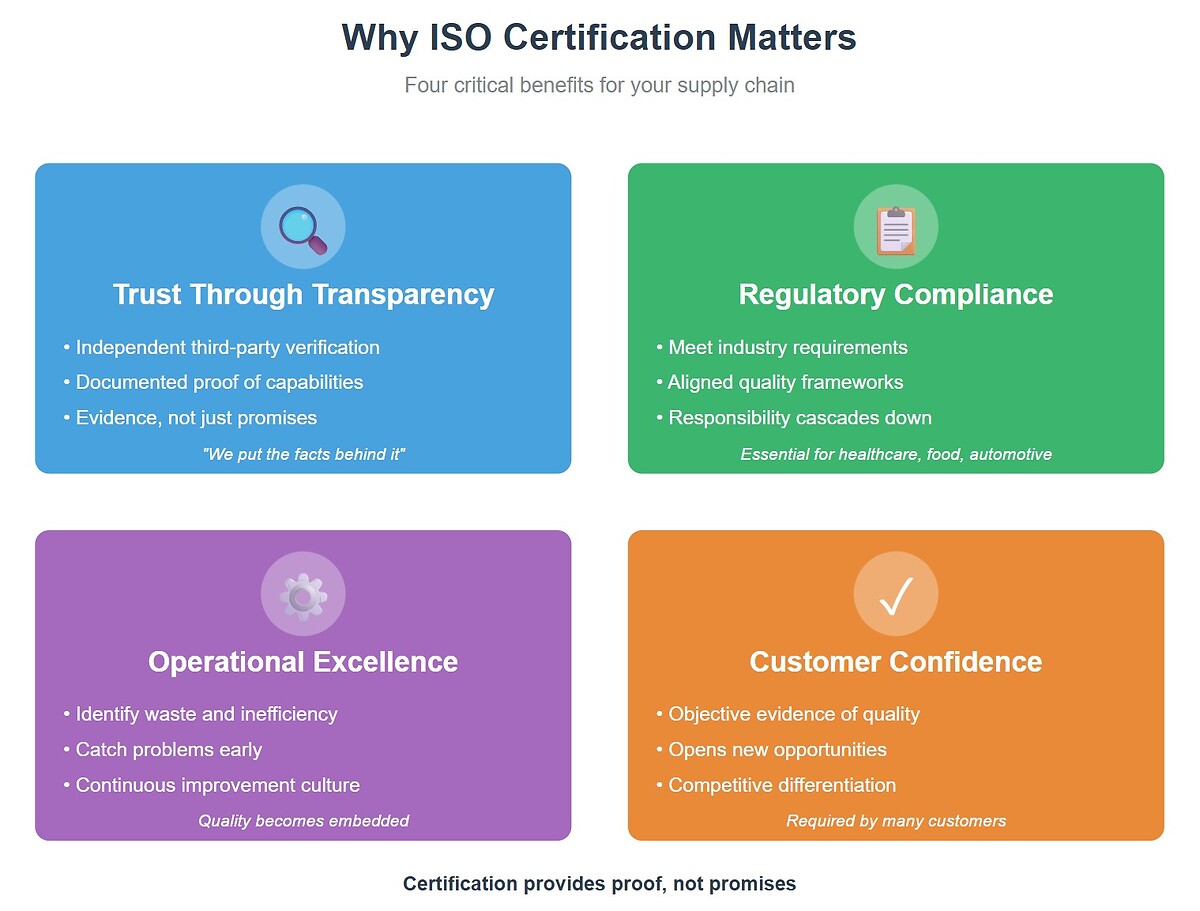
When companies are choosing logistics providers, they should look for ISO certification and not vague marketing claims.


Trust through transparency is the main benefit. When a pharmaceutical manufacturer needs to make sure their products maintain exact temperature ranges throughout distribution, an ISO 13485-certified logistics provider will give you documented proof of their capabilities. The certification means third-party auditors have verified that temperature monitoring systems work, staff know proper procedures, and corrective actions happen when problems occur.


Cravens describes this value clearly: "We don't operate from just hearsay or ‘trust me.’ It’s important to provide the evidence behind that. Our customers and our regulators can trust what we're saying. We put the facts behind it, and that's what the ISO program does."


Supply chain compliance is another critical factor. Many industries operate under strict regulations. Food companies must comply with FDA requirements and food safety standards. Medical device companies face FDA oversight and state licensing. Automotive manufacturers require precise just-in-time delivery and quality control.


When these companies outsource logistics, they remain responsible for compliance even when another company handles the work. Using a certified logistics provider means that everyone operates under the same quality framework. The responsibility cascades down the supply chain, and certification provides assurances at every step.


Operational efficiency is a natural result of quality management. Documenting processes identifies waste and inconsistency. Regular audits catch problems before they turn into larger issues. Corrective action systems make sure that when problems happen, the root cause gets solved.


Quality management systems capture the things that work and highlight those that don’t. A company might discover that temperature issues most often happen during specific handoffs, that certain packaging reduces damage, or that particular training methods improve accuracy. These insights become best practices rather than institutional knowledge that disappears when experienced employees leave.


Customer confidence increases when logistics providers have certified quality management. Certification provides objective evidence of consistent processes, trained staff, and effective problem resolution. 


The investment in certification pays off through new business opportunities. Some customers simply won't consider providers without relevant certifications. For healthcare logistics, ISO 13485 certification is often a minimum requirement. For food logistics, food safety certifications open doors that remain closed to non-certified competitors.

ISO_certification_audit_cycle.jpg

The challenge of maintaining multiple ISO certifications

Managing several certifications creates both efficiencies and challenges.


The efficiency comes from integration. Rather than maintaining separate quality systems for different certifications, companies can build a single integrated quality management system that meets all of the requirements.


Core elements are consistent across certifications: document control, training programs, internal audits, management reviews, corrective actions. These fundamental processes support all the certifications simultaneously. The specialized requirements get added to this common foundation.


The challenge is getting everything lined up. Each certification adds specific requirements that must be added without disrupting existing processes or conflicting with other standards. Cravens describes the careful balancing act: "What we want to make sure is we don't go in there and try to tweak our systems for a new certification and undo something for one of the other certifications."


Internal audits multiply as certifications increase. Each certified site needs annual internal audits for the quality management system. High-risk operations like pharmaceutical warehousing might need more frequent audits for good manufacturing practices. Add environmental audits, safety audits, and information security assessments, and the audit calendar fills up quickly.


Adding ISO certifications often follows customer need. Companies don't pursue every possible certification. They add certifications when customers request them or when business opportunities demand them.


Certifications like ISO 28001 (supply chain security) and ISO 37301 (compliance management) follow similar logic. Specific sites will pilot these certifications where customer needs or regulatory requirements make them valuable. Once we’ve introduced them successfully, we can expand to other relevant sites.


Should you use a certified logistics provider?

For companies deciding if they want to use an ISO-certified logistics provider, here's how to think about your decision.


Start with customer requirements. If your customers operate under ISO frameworks or regulatory requirements, they'll require you and your logistics provider to have the right certifications. Healthcare, food, automotive, and aerospace industries often have very strict quality requirements that flow down to logistics providers.


Consider your risk levels. High-value products, regulated goods, or items where failure carries significant consequences all benefit from the controls needed to get certification. Temperature-sensitive pharmaceuticals, hazardous materials, or products that might be recalled all need documented processes and accountability.


Think about regulatory exposure. In many industries, you remain responsible for compliance even when outsourcing your logistics. FDA regulations don't stop at your loading dock. Food safety requirements follow your products through distribution. Using a certified provider means they operate under the same quality frameworks that you do. 


Look for proof, not promises. The value of certification lies in independent audits. Third-party auditors have examined the provider's operations, verified their procedures, and confirmed they follow the right processes. This external validation gives you the assurance that marketing claims can't match.


The consistency of logistics providers like GEODIS shows that this commitment extends beyond obtaining certificates. It reflects quality management that’s built into everyday operations.

Experience what it's like to work with a trusted and certified logistics provider. Get in touch with GEODIS.

Building trust through quality

Supply chain certification, particularly ISO certification, isn’t about checking all the boxes. It provides independent verification that a logistics provider follows best practices, manages quality, and wants to improve how it does things.


For curious companies deciding on the right provider, these certifications can make a big difference. Certification tells you that a provider has invested in quality management, submits to regular independent audits, and documents what it does.


The key insight? Certification works because it requires proof, not promises. Third-party auditors verify what’s actually happening against what logistics providers say they do. Regular audits mean that everyone is thinking about quality all the time. Corrective actions solve problems with quality.


As supply chains grow more complex and regulations become more stringent, expect certification to become increasingly important. Logistics providers that put robust quality management systems in place take your business as seriously as you do. 

Frequently asked questions about ISO certification

ISO certification gives you independent verification that a logistics provider follows documented quality processes. Third-party auditors examine operations, verify procedures, and confirm the company follows ISO processes. 

The certification process has three major components: building the system, proving it works, and maintaining it consistently. Building the system means documenting procedures for every significant process and establishing training programs. Proving it works happens through third-party audits where independent auditors verify that documented procedures actually get followed. Maintaining certification requires ongoing internal audits, typically annually for each certified site, with third-party auditors returning every three years to verify continued compliance.

ISO 9001 is the foundation for all other ISO standards. It establishes the full general framework for how to manage quality, covering how to document processes, train employees, handle problems, measure performance, and drive improvement. Other ISO certifications build on this foundation, adding specific requirements for particular areas like environmental management (ISO 14001), health and safety (ISO 45001), medical devices (ISO 13485), or information security (ISO 27001).

Many industries operate under strict regulations, and companies remain responsible for compliance even when outsourcing their logistics. When companies outsource logistics work, they're still accountable for meeting regulatory requirements. Using a certified logistics provider means everyone operates under the same quality framework. Healthcare, food, automotive, and aerospace companies often require specific ISO certifications before they'll even consider a logistics provider.

Maintaining multiple certifications creates both efficiencies and challenges. The efficiency comes from building a single integrated quality management system that meets all requirements, since core elements are consistent across certifications: document control, training programs, internal audits, management reviews, and corrective actions. The challenge is getting everything line up—adding new certification requirements without disrupting existing processes. 

Look at consistency and longevity. Maintaining certification for many years demonstrates that quality management isn't just a program but embedded in everything a company does. Also look for proof rather than promises. A certified logistics provider can give you documented proof verified by independent auditors.

No. Logistics providers define which sites are certified and which sites are part of the program because not every customer wants or needs ISO certification. Companies often add certifications when customers request them or when business opportunities demand them. However, providers may still apply ISO-compliant practices across operations even at sites that aren't formally certified.

Paul Maplesden

Paul Maplesden

Lead Content Strategist

Paul deeply researches logistics and supply chain topics to create helpful, informative content for our US audience. Read Paul's work in the GEODIS blog, our in-depth GEODIS Insights reports, and our case studies and white papers.