07/01/2026
Freight Terminal: Operations and Challenges
Find out how GEODIS organizes operations at freight terminals to ensure reliable flows, secure cargo, and meet deadlines throughout the entire supply chain.
In an international supply chain, disruptions rarely occur during transit. They are concentrated at transit points, where goods change modes and where coordination becomes critical. The freight terminal is precisely this transition point. Its ability to handle cargo flows, organize inspections, and coordinate operations directly determines the performance of the shipment. At an air hub, a shipment that misses its 30-minute boarding window may be delayed by 12 to 24 hours, until the next available cargo flight.
Understanding the Role of a Freight Terminal
Definition and Main Function
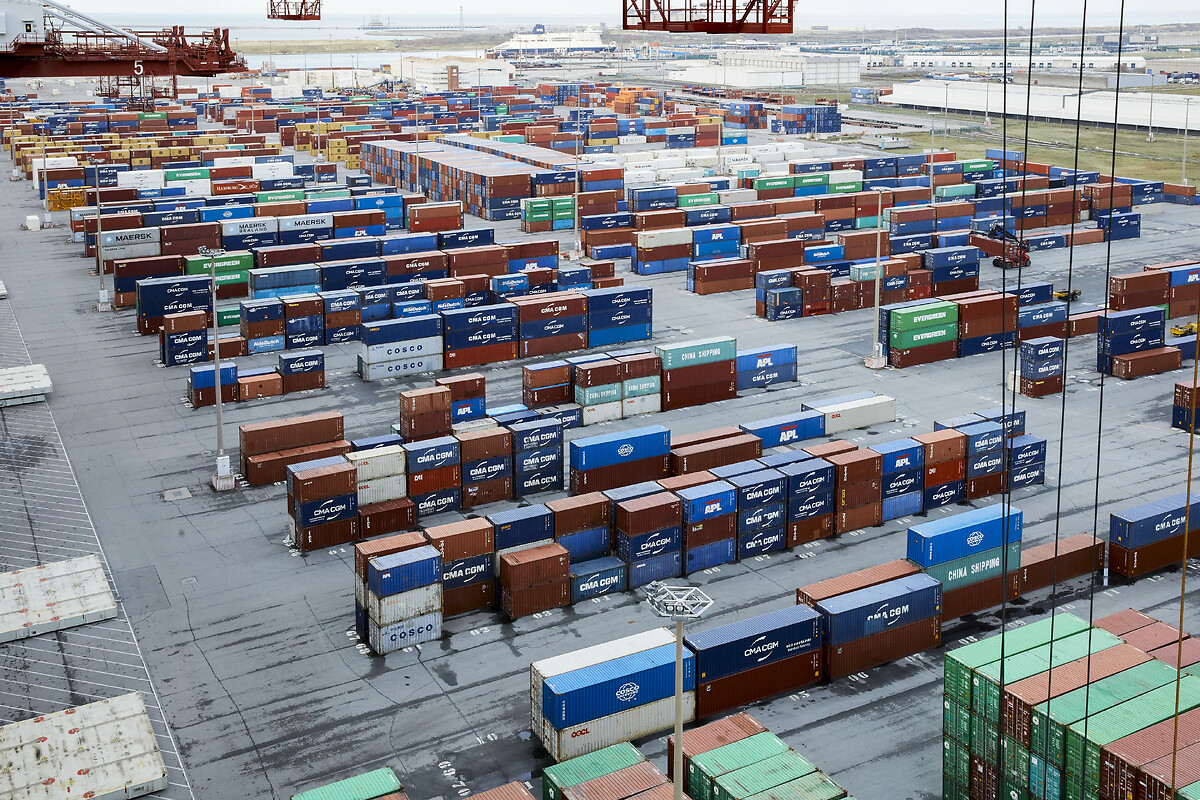
A freight terminal is a facility dedicated to handling cargo as it moves between different modes of transportation. In practical terms, it is the location where a freight shipment changes modes of transport: from an airplane to a truck, from a ship to a train, or from long-distance transport to regional distribution. Its area ranges from a few thousand to several tens of thousands of square meters depending on the volumes handled, with some major port terminals exceeding 100 hectares.
A terminal always comprises four functional areas:
- Loading and unloading areas sized according to the modes of transport served;
- Storage areas for containers, pallets, and packages awaiting re-shipment;
- Sorting and consolidation areas for reorganizing shipments according to their destination;
- Operational offices for document management, inspections, and customs clearance.
Without this organization, every transition between modes would become a bottleneck.
Importance in the Global Supply Chain
The terminal serves as an interface between the various stakeholders: shippers, freight forwarders, carriers, and logistics operators. It consolidates shipments from multiple shippers, organizes the route of goods to their final destination, and prepares each shipment for its next mode of transport, or for transfer to another network in the case of all-road transport schemes involving multiple service providers. It is also where compliance and security checks are conducted before the shipment continues its journey.
In international operations, multiple terminals may handle the same freight shipment in succession. Smooth operations therefore depend on coordination among them, rather than on the individual performance of each terminal.
Infrastructure and Equipment of a Freight Terminal
Types of Infrastructure Required
Freight terminals specialize according to the dominant mode of transport. Each type of facility is designed to meet specific requirements.
Port terminals are primarily dedicated to maritime freight, while also providing an interface with road and rail networks to ensure the continuity of freight flows. They handle containers unloaded from ships and coordinate their transport to local, regional, or international destinations. They include docks, container yards capable of holding tens of thousands of TEUs, and direct connections to road and rail networks. Their size determines their capacity to handle maritime traffic.
Airport cargo terminals, located in the cargo areas of airports, handle air cargo. There, goods are received, inspected, and consolidated into loading units called ULDs (Unit Load Devices). ULD containers and aircraft pallets optimise the capacity of cargo aircraft and ensure the security of sensitive or high-value goods. The use of ULDs is standard practice in virtually all express air freight operations.
Rail terminals, located near a rail station dedicated to rail freight, enable the direct transfer of containers between trains and trucks. These intermodal hubs play a key role in consolidating long-distance freight flows and controlling logistics costs, with savings of up to 15 to 25% compared to a 100% road-based system for distances exceeding 500 km.
Road terminals serve as consolidation and distribution points for shipments transported by truck. They consolidate pallets from different shippers and organize regional distribution, particularly for pallet transport and road transport operations.
Material Handling and Storage Equipment
A terminal’s operational efficiency depends directly on its equipment. Depending on the nature of the traffic, this includes forklifts, port cranes, rail gantries, automated conveyors, and high-density storage systems. At a modern port terminal, a gantry crane can handle 25 to 35 container movements per hour; at an airport cargo terminal, processing a full ULD typically takes a few minutes, provided the equipment is appropriately sized and available. Equipment failure at a critical station can disrupt the entire loading schedule and cause a ripple effect across multiple flight cycles.
Operational Processes at a Freight Terminal
Receipt and Inspection of Goods
Every freight shipment entering a terminal is recorded in the management system. Teams verify the shipping documents, check the goods for compliance, and validate customs clearance procedures. These checks are not just a formality: a shipment with incomplete documentation can be held up for 48 to 72 hours, directly impacting customer operations.
Storage and Inventory Management
The goods are then routed to the appropriate storage areas: standard warehousing, temperature-controlled zones, and secure areas for high-value products or hazardous materials. Storage location management is controlled by the terminal’s information system, which ensures the traceability of every package, pallet, or container until it is shipped out. This traceability is essential for responding quickly to location requests or customs inspections.
Shipping and Distribution
Shipment preparation involves grouping shipments according to their destination and subsequent mode of transport. At an airport terminal, this involves loading ULDs and transferring them to the aircraft. At a port terminal, it involves stuffing containers and positioning them at the dock. At a road terminal, it involves consolidating pallets by delivery route. Let’s consider a specific example: a temperature-controlled pharmaceutical shipment transiting through an air hub must be consolidated into its ULD, inspected, and transported to the runway within an operational window of 90 to 120 minutes before the aircraft’s departure. A 15-minute delay at any stage, and the shipment misses its flight, resulting in a 24-hour delay and a potential break in the cold chain.
Current Regulations and Standards
Safety and Security Standards
Cargo terminals are subject to strict security requirements, particularly for international shipments. Airport cargo terminals adhere to ICAO standards and European regulations on secure air cargo. Port terminals are subject to the ISPS Code. These measures require access controls, physical inspections, and rigorous documentation; failure to comply may result in the immediate detention of shipments.
Environmental Regulations
Terminals are also adapting to increasing environmental constraints: managing emissions from cargo handling, treating effluents, and optimizing energy efficiency in facilities. These requirements are driving the replacement of equipment and the development of more sustainable solutions, including the electrification of material-handling equipment and the consolidation of cargo flows to reduce empty runs.
Technological Innovations in Freight Terminals
Digitalization and Process Automation
Digitalization directly transforms terminal performance. Centralized management systems make it possible to track each shipment in real time, anticipate peaks in activity, and dynamically allocate resources. The automation of certain operations, such as sorting or moving containers, reduces processing times by 20 to 40 percent depending on the configuration and minimizes handling errors.
Use of Artificial Intelligence and the IoT
AI and the IoT go even further. Sensors embedded in containers, pallets, or equipment continuously transmit data: location, temperature, and cargo integrity. Analyzing this data helps optimize routes within the terminal, forecast handling needs, and ensure more reliable delivery commitments. In the most advanced terminals, these tools help reduce operating costs while improving operational reliability.
This transformation is part of broader multimodal transport frameworks, where terminal performance determines the performance of the entire system. The smoother the transitions, the more tangible the benefits of multimodal transport become: consolidation of cargo, cost reduction, and a controlled carbon footprint.
Turning the Freight Terminal into a Driver of Operational Performance
The freight terminal is not merely a technical step in the process. It is a hub on which the reliability of the entire supply chain depends. Poor organization leads to a cascade of delays, additional costs, and unmet customer commitments. Conversely, structured management transforms these transit points into drivers of performance. This is precisely where GEODIS comes in: analyzing freight flows, scaling operations, integrating digital tools, and coordinating interfaces between modes of transport. The goal is clear: to secure goods, ensure reliable delivery times, and guarantee operational continuity.
Talk to our experts to streamline your freight terminal operations and boost the performance of your supply chain.