01/30/2026
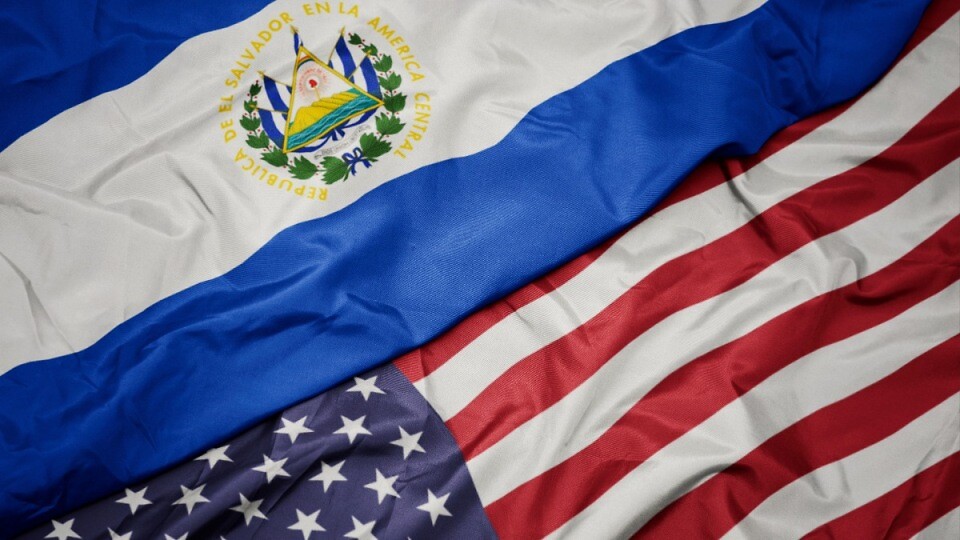
U.S. and El Salvador Move Forward with New Reciprocal Trade Framework
Check out this week's Customs Corner to read about the U.S.-El Salvador reciprocal trade framework, the U.S.-Guatemala trade agreement, and more.
Trade and Customs Updates
1) U.S. and El Salvador Move Forward with New Reciprocal Trade Framework
The United States and El Salvador have reached a Framework for an Agreement on Reciprocal Trade, aimed at deepening their economic partnership and building upon the existing Dominican Republic-Central America-United States Free Trade Agreement (CAFTA-DR), which has been in effect since 2006.
In the coming weeks, both nations will work to finalize the agreement, prepare it for official signing, and complete necessary domestic procedures before it enters into force. As part of this new framework, the U.S. will lift reciprocal tariffs on certain Salvadoran exports that cannot be sufficiently produced domestically, as well as select textiles and apparel products that qualify under CAFTA-DR provisions.
Additionally, the U.S. may take the agreement's impact on national security into account when considering future trade actions, including under Section 232 of the Trade Expansion Act of 1962. The two countries anticipate concluding the agreement soon; however, its implementation will depend on El Salvador's congressional approval and the issuance of a U.S. Executive Order. Once effective, qualifying Salvadoran textiles and apparel will be eligible for duty-free entry into the United States.
References:
- El Salvador Agreement 1.29 FINAL.pdf
- Joint Statement on Framework for United States-El Salvador Agreement on Reciprocal Trade – The White House
- Fact Sheet: The United States and El Salvador Agree to a Framework for Agreement on Reciprocal Trade | United States Trade Representative
2) U.S. and Guatemala Announce New Reciprocal Trade Agreement Framework
The United States and Guatemala have agreed on a Framework for an Agreement on Reciprocal Trade, designed to further strengthen their long-standing economic partnership and build on the Dominican Republic-Central America-United States Free Trade Agreement (CAFTA-DR), which has been in effect for both countries since 2006.
Over the next several weeks, officials from both nations will work together to finalize the details of the agreement, prepare it for official signing, and complete the necessary domestic procedures ahead of its implementation. As part of the framework, the United States will remove reciprocal tariffs on eligible Guatemalan exports that cannot be sufficiently produced domestically, as well as certain textiles and apparel products that qualify under CAFTA-DR provisions.
References:
- Guatemala ART 1.30 for posting CLEAN.pdf
- Joint Statement on Framework for United States-Guatemala Agreement on Reciprocal Trade – The White House
- Fact Sheet: The United States and Guatemala Agree to a Framework for Agreement on Reciprocal Trade | United States Trade Representative
3) Trump Issues Executive Order Targeting Oil Shipments to Cuba with Potential Tariffs
President Donald Trump has issued an executive order declaring that the actions of the Cuban government pose an "unusual and extraordinary threat" to the United States, invoking the International Emergency Economic Powers Act to authorize tariffs on countries that directly or indirectly supply oil or oil products to Cuba.
The order states that tariffs could be implemented as early as 12:01 a.m. on January 30, pending a review by the Commerce Secretary to determine if any country is making such sales after that date. The Secretary of State, in consultation with the Secretaries of the Treasury, Commerce, Homeland Security, and the U.S. Trade Representative, will assess whether and how much of an additional ad valorem duty should be imposed on goods from countries providing oil to Cuba. President Trump will then review their recommendations before making a final decision on imposing further tariffs.
The order defines "indirect" sales as supplying oil to Cuba through intermediaries or third countries, with knowledge that the oil is destined for Cuba, as determined by the Secretary of Commerce.
Reference:
Addressing Threats to the United States by the Government of Cuba – The White House
4) U.S. Customs and Border Protection Blocks Finca Monte Grande Coffee Over Forced Labor Concerns
U.S. Customs and Border Protection (CBP) announced the issuance of a Withhold Release Order (WRO) against coffee produced by Finca Monte Grande, effectively barring shipments of their coffee from entry at all U.S. ports. The order comes in response to evidence indicating that forced labor was used in the production of the coffee, including forced child labor.
CBP's investigation relied on a broad range of evidence, including statements from workers, government and NGO reports, international organization findings, and media coverage. The agency found that workers at Finca Monte Grande experienced six key indicators of forced labor as identified by the International Labour Organization: retention of identity documents, abusive living and working conditions, debt bondage, withholding of wages, excessive overtime, and abuse of vulnerability. These conditions led CBP to reasonably suspect that the coffee was produced with involuntary labor, as defined under U.S. law.
The latest action brings the number of active WROs to 55, alongside nine Findings. Importers whose shipments are detained under this order may choose to destroy or export the affected goods or provide evidence demonstrating that their products were not made with forced or child labor.
Reference:
CSMS # 67544333 - Withhold Release Order (WRO) on Coffee Harvested in Mexico by Finca Monte Grande
5) CBP Launches Revamped Forced Labor Website with Enhanced UFLPA Enforcement Dashboard
In a major step towards supporting the trade community's understanding and compliance with U.S. forced labor laws, U.S. Customs and Border Protection (CBP) has unveiled a redesigned Forced Labor website featuring streamlined navigation and expanded resources on enforcement, legal requirements, compliance, and reporting violations. The update includes the newly enhanced 2026 Uyghur Forced Labor Prevention Act (UFLPA) Enforcement Statistics Dashboard—a vital tool for monitoring enforcement actions and accessing transparent, real-time data.
Users can review enforcement data by shipment count or value, fiscal year, industry, exam outcome, country of origin, and commodity classification at the HTS-4 level. Visualizations such as line graphs, bar charts, and doughnut charts provide clear trend analysis, helping stakeholders stay informed about CBP's enforcement activities.
To assist users, CBP has also published a comprehensive guide for navigating the Dashboard. The Dashboard focuses exclusively on UFLPA enforcement actions and does not include data from other forced labor programs, such as Withhold Release Orders or Findings. All data is aggregated to safeguard sensitive law enforcement and trade information in accordance with federal laws and regulations.
The updated dashboard can be accessed at this link:
https://www.cbp.gov/newsroom/stats/trade/uyghur-forced-labor-prevention-act-statistics
Reference:
6) FDA Announces Removal of "FTZ" Affirmation of Compliance Code for Imports Effective February 21, 2026
The U.S. Food and Drug Administration (FDA) has issued a notice to the import community clarifying that the Affirmation of Compliance (AofC) Code "FTZ" (FTZ Admission Number) is not recognized as a valid code for FDA purposes. The agency relies on entry type and the PG30 record to determine if a shipment is an FTZ withdrawal, as detailed in the FDA's Supplemental Guide and Affirmations of Compliance Codes resource.
In alignment with the upcoming ACE system update, scheduled for February 21, 2026 (see CSMS #66836343), the "FTZ" code will be officially removed from ACE Appendix PGA. After this date, any transmission of the "FTZ" code in FDA data submissions will result in rejection by the FDA's system.
Importers and brokers are advised to consult FDA's official guides for correct data requirements and to contact FDA ACE Support at [email protected] with questions regarding FDA data rejections or valid compliance codes.
Reference:
CSMS # 67510839 - Transmission of Invalid Affirmation of Compliance Code "FTZ" for FDA
7) CBP Transitions to Electronic Refunds via ACH Effective February 6, 2026
Beginning February 6, 2026, U.S. Customs and Border Protection (CBP) will issue all refunds electronically via Automated Clearing House (ACH), subject to limited exceptions, as announced in the Electronic Refunds Interim Final Rule published January 2, 2026 in the Federal Register (FR Document 2025-24171), and CSMS 67270895, Electronic Refunds Interim Final Rule Effective February 6, 2026, issued January 2, 2026.
To prepare for February 6, CBP strongly encourages the trade community to review CBP's extensive resources (see below) related to the transition to all electronic refunds (subject to limited exceptions) and take any necessary action. Links to these resources can also be found on the main ACE webpage.
CBP Resources: ACE Portal Access and ACH Refund Enrollment
- NEW! ACE Portal and ACH Refunds FAQs
- Reference Sheet: ACH Refund Enrollment Overview
- January/February User Support Call Information: ACH Refund Enrollment Support Call Schedule
- Information Notice: ACE Portal Updates to Enable Electronic Refund Enrollment
- Information Notice: Automated ACE Portal Application for Importer Accounts
- Information Notice: ACE Portal Feature for Trade Users to Add Notify Parties
- Training Guide: ACH Refund Enrollment in the ACE Portal
- Training Guide: ACE Portal Feature to Add Notify Parties
The modernization of refund issuance from paper checks to ACH aligns with Executive Order 14247, Modernizing Payments To and From America's Bank Account, which directs federal agencies to transition to electronic refunds for all federal disbursements and receipts to the extent permitted by law.
For questions regarding this transition, please contact [email protected].
EVENT: ACE Support Calls on Electronic Refunds Final Rule
Beginning February 6, 2026, U.S. Customs and Border Protection (CBP) will issue all refunds electronically via Automated Clearing House (ACH) (subject to limited exceptions), as announced in the Electronic Refunds Interim Final Rule published January 2, 2026 in the Federal Register (FR Document 2025-24171).
Deadline/Event Date:
- Wednesday, February 11, 2026 | 2:00 PM - 3:00 PM | Join via Microsoft Teams
EVENT: Wood Packaging Materials (WPM): Navigating Compliance Webinar
Thursday, February 19, 2026 | 12:00 PM ET | Online
U.S. Customs and Border Protection's (CBP) Office of Field Operations is hosting a webinar titled Wood Packaging Materials (WPM): Navigating Compliance. This webinar will take a deeper dive into the steps stakeholders should follow when they receive an Emergency Action Notification (EAN). CBP and APHIS experts will walk participants through each phase of the response and resolution process, from initial notification to final outcomes.
Wood Packaging Materials (WPM): Navigating Compliance Webinar - Website
Get expert advice on customs and foreign trade, direct from our comprehensive customs brokerage and trade services teams.