12/26/2025
U.S. Trade Representative Announces New Section 301 Tariff Action on Chinese Semiconductors
Check out this week's Customs Corner to read about new Section 301 tariffs on Chinese semiconductors, the reinstated ISPM-15 hyphen requirement for wood packaging, and more.
Trade and Customs Updates
1) U.S. Trade Representative Announces New Section 301 Tariff Action on Chinese Semiconductors
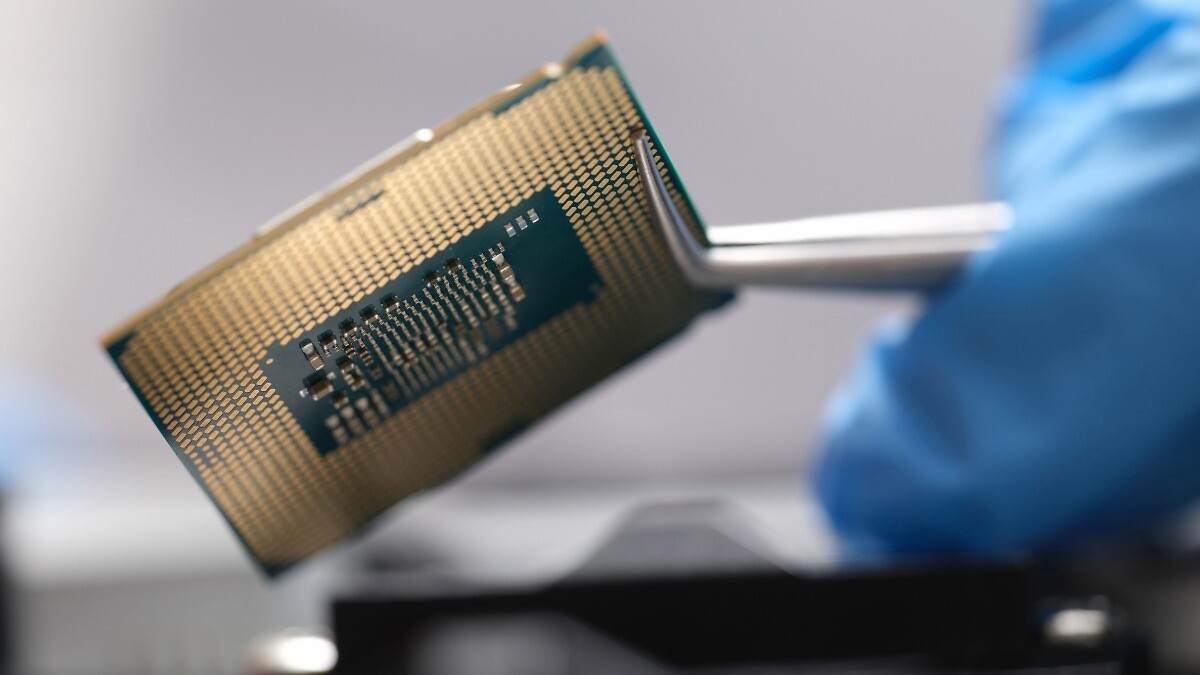
The United States Trade Representative (USTR) has determined that China’s acts, policies, and practices are actionable under Section 301 of the Trade Act of 1974, and has announced new tariff measures on Chinese semiconductors, effective immediately.
Under the new action, semiconductors from China will be subject to an initial tariff rate of 0 percent, with an increase scheduled for June 23, 2027. The final tariff rate will be announced at least 30 days before it takes effect. This action is in addition to the existing 50 percent Section 301 tariff previously imposed on Chinese semiconductors due to forced technology transfer concerns.
The USTR will continue monitoring the effectiveness of this measure and will consider further actions as necessary. In line with this determination, modifications have been made to the Harmonized Tariff Schedule of the United States (HTSUS), detailed in the Annex accompanying the notice. Chinese products listed under HTSUS heading 9903.91.05 remain subject to existing antidumping, countervailing, and other applicable duties and fees.
The HTS affected by this action are below:
- 28046100 Silicon containing by weight not less than 99.99 percent of silicon
- 38180000 Chemical elements doped for use in electronics, in the form of discs, wafers etc., chemical compounds doped for electronic use
- 85411000 Diodes, other than photosensitive or light-emitting diodes
- 85412100 Transistors, other than photosensitive transistors, with a dissipation rating of less than 1 W
- 85412900 Transistors, other than photosensitive transistors, with a dissipation rating of 1 W or more
- 85413000 Thyristors, diacs and triacs, other than photosensitive devices
- 85414910 Other photosensitive semiconductor diodes, other than light-emitting
- 85414970 Photosensitive transistors
- 85414980 Photosensitive semiconductor devices nesoi, optical coupled isolators
- 85414995 Other photosensitive semiconductor devices, other than diodes or transistors, nesoi
- 85415100 Other semiconductor-based transducers, other than photosensitive transducers
- 85415900 Other semiconductor devices, other than semiconductor-based transducers, other than photosensitive devices, nesoi
- 85419000 Parts of diodes, transistors, similar semiconductor devices, photosensitive semiconductor devices, LED's and mounted piezoelectric crystals
- 85423100 Electronic integrated circuits: processors and controllers
- 85423200 Electronic integrated circuits: memories
- 85423300 Electronic integrated circuits: amplifiers
- 85423900 Electronic integrated circuits: other
- 85429000 Parts of electronic integrated circuits and microassemblies
Chinese products listed under HTSUS heading 9903.91.05 and described in subdivision (f)(ii) of note 31 to subchapter III, chapter 99 of the HTSUS, as set forth in the Annex, will remain subject to all applicable antidumping, countervailing, and other duties, fees, and charges. Any product covered by this Annex, except those eligible for admission under ‘domestic status’ per 19 CFR 146.43, and admitted into a U.S. foreign trade zone on or after the effective date of the new duties, may only be admitted as ‘privileged foreign status’ under 19 CFR 146.41. Upon entry for consumption, these products will be subject to any applicable ad valorem duty rates or quantitative restrictions according to their HTSUS classification.
Importers and stakeholders are advised to review the updated HTSUS provisions and prepare for the phased implementation of these new Section 301 tariffs.
Reference:
2) APHIS to Reinstate ISPM-15 Hyphen Requirement for Wood Packaging Material on January 1, 2026
The U.S. Department of Agriculture’s Animal and Plant Health Inspection Service (APHIS) is reminding importers and the trade community that the temporary suspension of the ISPM-15 hyphen requirement for Wood Packaging Material (WPM) ends on December 31, 2025.
The ISPM-15 standard mandates that a hyphen must separate the country code from the facility code in the compliance mark on WPM. APHIS had suspended enforcement of this requirement earlier in the year due to widespread non-compliance, but full enforcement will resume starting January 1, 2026, with no grace or soft enforcement period.
Once the requirement is back in force, non-compliant shipments may face a range of actions. Cargo could be held at the port of arrival, and, depending on port resources, the WPM may be separated and exported while the cargo remains. If separation or corrective action is not possible, the shipment may be refused entry and require re-export. U.S. Customs and Border Protection (CBP) may also impose penalties under Title 19 for violations. While reconditioning options such as shredder or hammermiller processing may become available in the future, no compliance agreements are currently in place as companies are still sourcing appropriate equipment.
Importers with shipments currently en route that will not arrive in the U.S. before the deadline and contain non-compliant WPM have two options: divert shipments to another country for reconditioning or self-report noncompliance to APHIS and CBP in advance, which may help expedite processing upon arrival.
APHIS encourages all stakeholders to ensure full compliance with ISPM-15 marking requirements to avoid delays, penalties, or re-export of shipments starting January 1, 2026.
Reference:
3) President Declares December 24 and 26, 2025, as Federal Holidays; CBP Adjusts Payment Deadlines
The President has issued an Executive Order designating both December 24 and December 26, 2025, as Federal Holidays, officially adding these dates to the list of U.S. Customs and Border Protection (CBP) holidays alongside December 25.
As a result, any entries previously submitted with a statement print date of December 24 or December 26 will still generate on those days, but payment deadlines for these entries are extended to December 29, 2025. Filers who wish to adjust the payment print date from December 24 or 26 to December 29 for previously transmitted summaries are permitted to make this change at their discretion.
Reference:
CSMS # 67158887 - December 24 and 26, 2025, CBP Holiday for Payments
4) CBP Announces ACE Portal Upgrade Allowing Importers to Add Notify Parties Directly
U.S. Customs and Border Protection (CBP) will implement an upgrade to the Automated Commercial Environment Secure Data Portal (ACE Portal) that empowers importers who are ACE Portal Trade Account Owners (TAOs) to add notify parties—also known as “Special Address Notification (CBP Form 4811) notify parties”—directly within the Notify Parties tab of the Importer sub-account view.
This enhancement streamlines the process for importers, giving them greater control and flexibility over their notifications and trade data management. For further details, stakeholders are encouraged to consult the official Trade Information Notice.
References:
- CSMS # 67190197 - ACE Portal Feature for Trade Users to Add Notify Parties Set to Deploy January 2
- Trade Information Notice: ACE Portal Feature for Trade Users to Add Notify Parties | U.S. Customs and Border Protection
EVENT: CPSC's eFiling Team Will Host A Virtual Webinar – eFiling Is 6 Months Away
January 8, 2026 | 2:00 pm - 3:00 pm EST | Virtual
CPSC's eFiling team will be hosting a virtual webinar on January 8th from 2-3pm, which will highlight the 6-month mark until the full implementation date of eFiling for most regulated products. The topics will include a general overview, what to expect, certification resources, and updates to the Product Registry. Posted in the Public Calendar on 12/4/2025.
EVENT: Trade Violations Reporting (TVR) Q1 Webinar
Tuesday, January 13, 2026 at 1:30 pm EST | Virtual
CBP is offering quarterly webinars throughout FY26 on how to report suspected trade violations online. The first round of webinars will be held on January 13 and 15. CBP will be offering free webinars on how anyone can report suspected trade violations online using the Trade Violations Reporting tool, as well as how to file EAPA allegations. Registration is free and available to anyone. You are required to register in order to attend the webinar.
EVENT: Enforce and Protect Act (EAPA) Q1 Webinar
Thursday, January 15, 2026 at 1:30 pm EST | Virtual
CBP is offering quarterly webinars throughout FY26 on how to report suspected trade violations online. The first round of webinars will be held on January 13 and 15. CBP will be offering free webinars on how anyone can report suspected trade violations online using the Trade Violations Reporting tool, as well as how to file EAPA allegations. Registration is free and available to anyone. You are required to register in order to attend the webinar.
Get expert advice on customs and foreign trade, direct from our comprehensive customs brokerage and trade services teams.